Table of Contents
- Can Professional Cleaners Handle Tile and Grout? The Short Answer
- Signs Your Tile and Grout Need Professional Attention
- The Professional Tile and Grout Cleaning Process
- How Long Does Professional Tile Cleaning Take?
- Benefits of Professional Grout Sealing
- DIY vs Professional Cleaning: What You Can and Cannot Do
- How to Maintain Tile and Grout Between Professional Cleanings
- Safety and Environmental Impact of Cleaning Agents
- Frequently Asked Questions
Last Updated: September 17, 2026
Can Professional Cleaners Handle Tile and Grout? The Short Answer
Yes, professional cleaners can handle tile and grout, and in most cases they clean it more thoroughly than any household method. This guide from PowerPro Carpet Cleaning explains what trained technicians actually do, when it’s worth hiring them, and how to keep results looking sharp afterward. Tile and grout cleaning is the process of removing embedded soil, grease, and mineral buildup from tile surfaces and the porous grout lines between them using specialized equipment and pH-balanced solutions. Grout is cement-based and porous, so it traps dirt that a mop simply pushes around.
That porosity is the whole problem. A damp mop lifts surface dust but leaves grease and grime sitting inside the grout lines, where it darkens and hardens over time.
Below, we’ll break down the signs that your floors need professional attention, what the cleaning process involves, and how long it takes.
Signs Your Tile and Grout Need Professional Attention
The clearest sign is grout that stays dark even after you scrub it. When discoloration survives normal cleaning, the soil has bonded to the porous surface and needs extraction rather than agitation.
Watch for these indicators:
- Grout lines that look uniformly gray or black instead of their original color
- A sticky or gritty film on the tile that returns within days of mopping
- White, chalky deposits near grout lines, a mineral buildup known as efflorescence
- Musty odors in bathrooms or kitchens, which can point to mold growth in damp grout
- Visible mold or mildew in shower corners and behind fixtures
- Tile that feels rough or dull where it once felt smooth
If you notice several of these at once, the floor has moved past routine maintenance into restoration territory.
The Professional Tile and Grout Cleaning Process
Professional tile and grout cleaning is a multi-step process that combines surface agitation, hot water extraction, and targeted treatment of stains and buildup. The goal is to lift soil out of the grout rather than spread it across the surface.
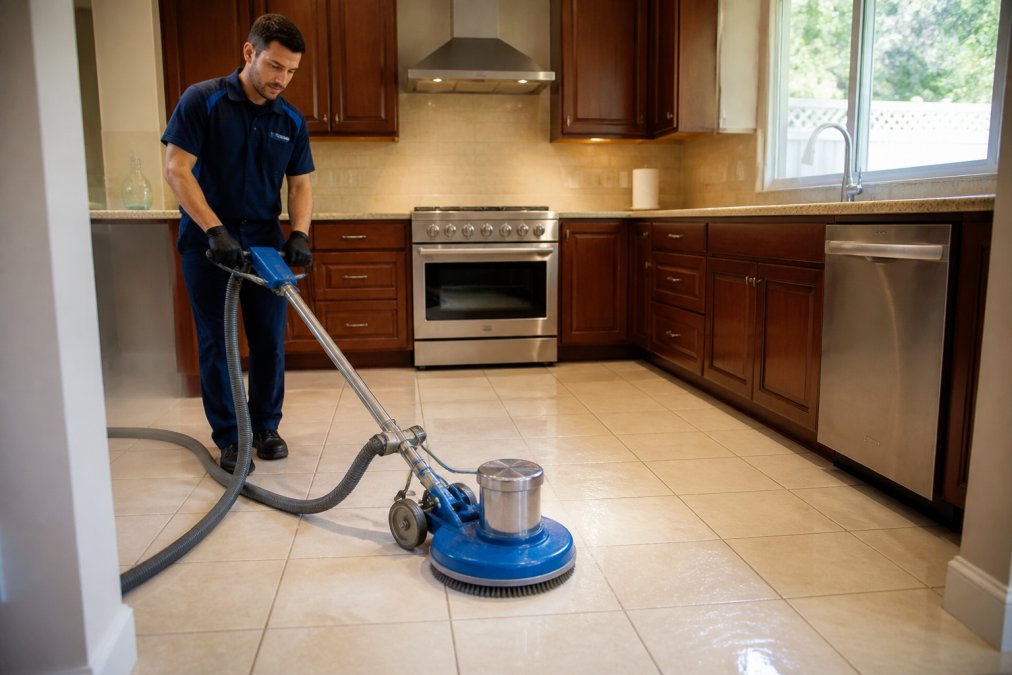
A typical visit follows this sequence:
- Inspect the floor and identify the tile type, grout condition, and any cracked or failing areas
- Pre-treat heavy soil and grease with an alkaline cleaner suited to the material
- Agitate the grout lines with a brush or micro-scrubbing tool to break up bonded soil
- Extract the loosened dirt and cleaning solution with hot water extraction or high-pressure steam
- Vacuum away residual moisture so the floor dries quickly
- Apply a penetrating sealer once the grout is fully dry
The agitation step is the one most homeowners skip, and it’s the step that matters most. Grout needs mechanical action before any solution can pull soil free.
Hot Water Extraction vs Chemical Cleaning
Hot water extraction uses heated water and suction to flush soil out of grout, while chemical cleaning relies on cleaning agents alone to dissolve it. Extraction is the stronger option for embedded dirt because it removes the soil instead of loosening it in place.
Chemical cleaning has its place. For light soil or delicate stone, a pH-balanced solution and gentle agitation may be all that’s needed. For kitchens, entryways, and other high-traffic areas, extraction paired with pre-treatment delivers a visibly deeper result.
Matching Methods to Tile Materials
Not every tile tolerates the same treatment, and this is where material compatibility decides the approach. Ceramic tile is glazed and forgiving, so most methods work. Porcelain tile is denser and less absorbent, which makes it easier to keep clean but still benefits from extraction in the grout lines. Natural stone such as travertine, marble, or slate is the exception: acidic cleaners etch the surface, so technicians use pH-balanced solutions and lower pressure.
Ask any cleaner how they handle natural stone before booking. If the answer is vague, that’s a red flag.
How Long Does Professional Tile Cleaning Take?
Professional tile cleaning typically takes one to three hours for a standard kitchen or bathroom, and longer for large open floors or heavily soiled grout. Most of that time goes into agitation and extraction, not drying.
A few variables stretch the timeline:
- Square footage: a small bathroom moves quickly; a full first floor takes considerably longer
- Soil level: years of built-up grease adds pre-treatment and repeat passes
- Grout width: wider grout lines hold more soil and take longer to clean
- Sealing: adding a sealer tacks on drying time before application
Plan on the floor being out of use for a few hours after cleaning. Low-water methods dry faster than traditional flooding, which matters if you have pets or kids walking through.
Benefits of Professional Grout Sealing
Grout sealing is the step that protects your results, and skipping it is the most common mistake homeowners make. A penetrating sealer soaks into the porous grout and blocks liquids from absorbing, which slows staining and makes routine cleaning far easier.
The benefits stack up quickly:
- Stains stay on the surface instead of soaking in, so they wipe away
- Grout holds its color longer between cleanings
- Mold and mildew have a harder time taking hold in damp areas
- The floor resists premature wear in high-traffic zones
- Future cleanings take less time and less product
Sealer isn’t permanent. Most grout needs resealing periodically depending on traffic and moisture, and a simple water test tells you when: if water soaks in instead of beading up, it’s time.
Test your sealer with a few drops of water in an inconspicuous corner. If the water beads and sits on the surface, the seal is intact. If it darkens the grout and disappears, reseal before the next round of staining starts.
DIY vs Professional Cleaning: What You Can and Cannot Do
You can handle routine maintenance yourself, but you cannot replicate professional-grade equipment or safely treat every material. Knowing the line saves you from damaging your own floors.
Here’s what each approach realistically covers:
| Task | DIY | Professional |
|---|---|---|
| Sweeping and damp mopping | Yes | Yes |
| Light surface stain removal | Yes | Yes |
| Deep grout agitation | Limited | Yes |
| Hot water extraction | No | Yes |
| Mold remediation in grout | Risky | Yes |
| Natural stone treatment | Risky | Yes |
| Sealing after deep clean | Possible | Yes |
The DIY ceiling is real. Household scrubbing can’t generate the heat or suction that pulls soil out of grout, and harsh DIY chemicals can etch stone or strip a sealer. For everyday upkeep, your own effort is fine. For restoration, it isn’t.
Never mix bleach and ammonia-based cleaners, and never pour undiluted bleach onto colored grout. It can strip the color permanently and leave you with a patchy floor that no cleaning will fix.
How to Maintain Tile and Grout Between Professional Cleanings
Maintenance is what determines how long a professional clean lasts, and it takes less effort than most people expect. The goal is to stop soil from bonding in the first place.
A workable routine:
- Sweep or vacuum hard floors weekly to remove grit before it scratches
- Damp mop with a pH-balanced solution rather than a soaking wet mop
- Wipe up spills promptly, especially oil, wine, and pet accidents
- Ventilate bathrooms after showers to cut moisture that feeds mold
- Place mats at entryways to catch tracked-in dirt
- Avoid abrasive pads and acidic cleaners on grout and stone
The single biggest mistake is over-wetting. Standing water pushes soil deeper into grout lines and can seep into the subfloor, which is a far more expensive problem than dirty grout.
Safety and Environmental Impact of Cleaning Agents
The cleaning agents used on tile and grout matter for your indoor air quality, not just your floor. Residue left behind can off-gas, and harsh chemicals can irritate skin and lungs, particularly in homes with kids, pets, or allergy sufferers. This is the part of tile cleaning most service providers skip, and it is where the choice of solution matters as much as the equipment.
Why residue is the real problem. A cleaner that loosens soil but is not fully rinsed away leaves a sticky film behind. That film attracts new dirt, which is why some DIY jobs look worse a week later. Alkaline cleaners cut grease effectively, but they need thorough rinsing so no residue remains. pH-balanced solutions are gentler on surfaces and safer for routine use. Penetrating sealers, applied correctly, reduce how often you need strong cleaners at all.
What to look for in a product or a provider.
- Solutions that are pH-balanced and free of harsh acids, which are safer for calcium-based stone and for the people living on it
- Products labeled as low-VOC, since volatile organic compounds are the main source of that sharp “clean” smell and the associated respiratory irritation
- Green-certified or organic formulations, which are screened for both environmental impact and indoor air quality
- A low-water method, which uses less solution and leaves less residue than traditional flooding
- Clear rinsing and extraction steps, because the rinse is what actually removes the residue
Pet and child safety. Pets and young children are closer to the floor and more likely to come into contact with residue, so the rinse step matters more in those homes. A low-water method that extracts the solution and dries within hours reduces the window when a pet or child could walk through a wet, chemically treated area. If a provider cannot tell you what is in the solution and how it is rinsed, that is a reasonable reason to keep looking.
Mold and moisture. Cleaning agents are only half the story. Standing water and slow drying feed mold and mildew in grout and can seep into the subfloor, which is a far more expensive problem than dirty grout. A method that removes soil completely and leaves the floor dry quickly addresses both the cleaning and the moisture side of the equation.
At PowerPro Carpet Cleaning, our technicians use organic, green-certified solutions and a low-water method that leaves no dirt-attracting residue and helps prevent mold and mildew growth. That combination matters most in homes where allergen removal and indoor air quality are priorities, and it is available throughout Monmouth County and central New Jersey.
The safest clean is one that removes soil completely and leaves nothing behind. Residue is what makes floors get dirty again faster, and it is the most common reason a DIY job looks worse a week later.
Frequently Asked Questions
Is it worth paying for professional tile and grout cleaning?
Professional cleaning reaches what mops and household scrubbing cannot, including deep-set soil in porous grout and the bacteria that live there. It also restores the look of floors that have gone gray or yellow over years of use. For homes in Monmouth County and central New Jersey with high-traffic kitchens, hallways, or bathrooms, the results usually last longer than DIY attempts because technicians use professional-grade equipment and follow up with grout sealing.
Can professional cleaners remove deep stains from grout?
Most deep stains come out. Grease, dirt, soap scum, and mildew respond well to hot water extraction paired with alkaline cleaners and micro-scrubbing. Efflorescence, which is a white mineral deposit, needs a different approach because it comes from moisture inside the grout. If a stain has been sitting for years or the grout is cracked, color sealing may be the better fix. A technician can usually tell which category your stain falls into after a quick on-site look.
Do professional cleaners use harsh chemicals on tile floors?
Not necessarily. Many companies, including PowerPro Carpet Cleaning, use organic, green-certified solutions that are pH-balanced for tile and grout. These cleaners break down grease and soil without leaving the residue that attracts new dirt. For tougher jobs, technicians may step up to stronger alkaline cleaners, but they apply them in controlled amounts and rinse thoroughly with hot water extraction. Ask what products will be used before the visit if you have pets or kids in the home.
How often should you have your tile and grout professionally cleaned?
For most homes, every 12 to 18 months is enough. Kitchens, entryways, and bathrooms in high-traffic areas may need attention every 6 to 12 months, especially if you have pets or kids. Floors with light use and regular mopping can stretch to 24 months. Grout sealing after each cleaning extends the window and makes routine mopping more effective, which is why many homeowners in central New Jersey schedule cleaning and sealing together.