Table of Contents
- How to Compare Heavy Traffic Carpet Cleaning Services
- Top Picks: Best Carpet Cleaning Services for Heavy Traffic
- PowerPro Carpet Cleaning: Dry-Steam and Organic Solutions
- Oxi Fresh: Low-Moisture Oxygen Cleaning
- Be Amazed Carpet Cleaning: IICRC-Certified Technicians
- Jersey’s Elite Cleaning: Responsive Local Service
- Best Way Carpet Cleaning: Deep Extraction for Soiled Lanes
- Bee Clean Carpet Cleaning: Restoration for Neglected Carpets
- Mel’s Carpet Cleaning: Budget-Friendly for Large Spaces
- How to Remove Traffic Lane Graying from Carpet
- Carpet Cleaning Frequency for Busy Homes
- Benefits of Dry-Steam Carpet Cleaning for Busy Households
- Choosing the Right Method for High-Traffic Areas
- Furniture Management During Professional Cleaning
- DIY Maintenance vs. Professional Schedules
- Conclusion
- Frequently Asked Questions
Last Updated: September 29, 2026
How to Compare Heavy Traffic Carpet Cleaning Services
Finding the best carpet cleaning service for heavy traffic areas starts with knowing what separates a trained technician from a franchise call center. Soil filtration lines, matted pile, and gray traffic lanes need specific methods, not a generic shampoo and vacuum.
PowerPro Carpet Cleaning has handled residential and commercial carpets since 1989, and in that time we’ve seen one pattern hold true: the difference between a carpet that bounces back and one that stays flat comes down to three questions asked before anyone plugs in a machine. Below, we break down certifications, quote questions, and the specific methods that restore worn lanes.
Certifications and Training Standards
The IICRC (Institute of Inspection, Cleaning and Restoration Certification) sets the training benchmark most reputable firms follow. Technicians trained to these standards understand fiber identification, pre-treatment chemistry, and safe drying procedures for high-traffic carpet maintenance.
Ask whether technicians are certified in specific categories, not just “trained.” General certification covers basics; specialized coursework covers upholstery cleaning, odor control, and water damage response. A company with certified staff is more likely to follow a documented process rather than improvising on your carpet pile.
What to Ask During a Service Quote
A good service quote answers five things before you book:
- Which cleaning method will be used, and why it fits your carpet fibers
- Whether pre-treatment and post-treatment are included or billed separately
- Estimated drying time and what equipment shortens it
- How furniture will be moved and whether that’s included
- Whether the technician is IICRC certified or a subcontractor
Vague answers on any of these usually mean vague results. Get the method in writing.
Top Picks: Best Carpet Cleaning Services for Heavy Traffic
The best carpet cleaning service for heavy traffic areas balances method, certification, and drying speed. Here are the providers worth considering, starting with our top pick.
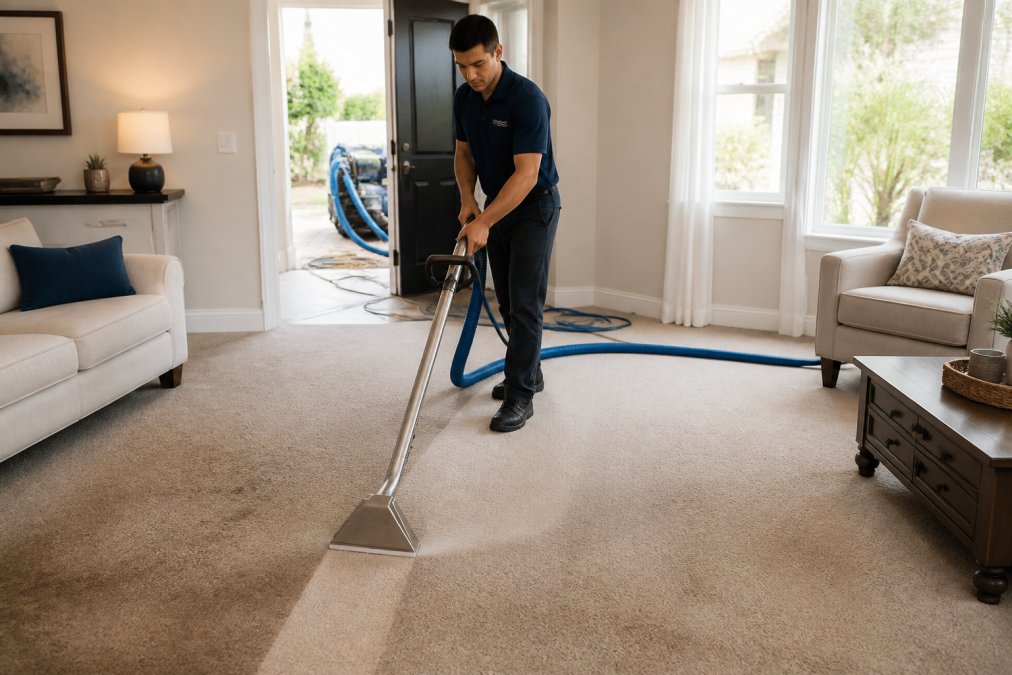
PowerPro Carpet Cleaning: Dry-Steam and Organic Solutions
PowerPro Carpet Cleaning earns the top spot for one practical reason: the low-water dry-steam method dries within hours, not days. That matters in a busy household where kids and pets can’t stay off the carpet for 24 hours.
The company is family-owned and has operated since 1989. Technicians are trained to Inspection Institution of Cleaning and Restoration standards, and the organic, green-certified solutions leave no dirt-attracting residue behind. Carpets stay cleaner longer between visits, which reduces how often you need deep cleaning.
PowerPro also handles carpets, area rugs, tile, grout, upholstery cleaning, and air ducts, so a single visit covers more than just the traffic lanes. Emergency calls are answered around the clock for water damage situations. The service area covers New Jersey, including Monmouth County and central New Jersey communities.
Best for: Households and businesses that need fast drying, organic solutions, and one company for carpet, upholstery, and tile.
Oxi Fresh: Low-Moisture Oxygen Cleaning
Oxi Fresh built its reputation on low-moisture, oxygen-powered cleaning with a stated one-hour dry time. The oxygen solution breaks down dirt and stains, which works well on set-in spots in high-traffic zones.
The trade-off is consistency. As a franchise, pricing and service quality vary by location, so results depend heavily on the local operator. Worth considering if fast turnaround matters more than a single, predictable standard.
Be Amazed Carpet Cleaning: IICRC-Certified Technicians
Be Amazed leans on certification as its selling point. IICRC-certified technicians and upfront pricing with free estimates make the quote process transparent, which is rare in this industry.
The limitation is geography. Service is restricted to specific regions, so availability depends on where you’re located.
Jersey’s Elite Cleaning: Responsive Local Service
Jersey’s Elite Cleaning is a highly rated local operator known for responsiveness from first contact to job completion. Attention to high-traffic zones is a stated focus, and customer satisfaction ratings are strong.
Availability can be tight because of demand. Book ahead if you need a specific date.
Best Way Carpet Cleaning: Deep Extraction for Soiled Lanes
Best Way specializes in heavily soiled carpets and worn traffic lanes using deep extraction. If your lanes have gone gray and matted from years of foot traffic, this is the type of service built for that problem.
Pricing is competitive, and the company handles both residential and commercial work. Service area is geographically restricted.
Bee Clean Carpet Cleaning: Restoration for Neglected Carpets
Bee Clean focuses on carpet restoration rather than routine cleaning. For carpets that have been neglected or abused, restoration techniques go beyond a standard pass with an extraction wand.
Expert stain removal is a strength. Like several picks here, service is limited to specific regions.
Mel’s Carpet Cleaning: Budget-Friendly for Large Spaces
| Service | Method | Standout Strength | Best For |
|---|---|---|---|
| PowerPro Carpet Cleaning | Dry-steam, low-water | Fast drying, organic solutions | Busy households, full-property service |
| Oxi Fresh | Low-moisture oxygen | One-hour dry time | Quick turnaround needs |
| Be Amazed | Certified extraction | IICRC-certified technicians | Transparent pricing seekers |
| Jersey’s Elite | Deep cleaning | Responsive local service | Personalized attention |
| Best Way | Deep extraction | Heavily soiled lanes | Gray, matted traffic lanes |
| Bee Clean | Restoration | Neglected carpet recovery | Long-overdue carpets |
| Mel’s | Square-footage cleaning | Large-space efficiency | Budget-conscious renters |
How to Remove Traffic Lane Graying from Carpet
Traffic lane graying is soil that has bonded to carpet fibers through repeated foot traffic, not a color change in the carpet itself. The fix requires pre-treatment, agitation, and hot water extraction, in that order.
Skipping pre-treatment is the most common mistake. Soil filtration embeds particles deep in the pile, and a quick surface clean won’t lift them. A proper process looks like this:
- Vacuum thoroughly to remove loose soil and grit
- Apply pre-treatment and let it dwell to break down bonded particles
- Agitate the fibers to loosen embedded soil
- Extract with hot water or dry-steam equipment
- Groom the pile and speed drying with air movers
For DIY attempts, a spot treatment on the lane followed by blotting helps, but bonded graying usually needs professional equipment. Transition points between rooms and entryways collect the most soil and deserve extra attention.
Carpet Cleaning Frequency for Busy Homes
Busy homes with pets and children typically need professional deep cleaning every 6 to 12 months, with high-traffic lanes benefiting from more frequent attention. Households with allergies or multiple pets often fall on the shorter end of that range.
Between professional visits, vacuum high-traffic areas two to three times per week. Entry mats at every door cut down on tracked-in soil. Quick spot treatment within minutes of a spill prevents stains from setting.
If lanes look gray or the carpet feels matted within a few months of cleaning, your interval is too long. Shorten it.
Benefits of Dry-Steam Carpet Cleaning for Busy Households
Dry-steam cleaning uses far less water than traditional steam cleaning, which means carpets dry within hours instead of a full day. For a household that can’t block off rooms for 24 hours, that difference is the whole decision.
Less moisture also means less risk of mold and mildew growth underneath the carpet, a real concern when carpets stay damp. The low-water method leaves no sticky residue, so carpets don’t attract dirt as quickly afterward. Organic, green-certified solutions appeal to households with pets, young children, or allergy concerns.
The result is a deeper clean with a faster return to normal life.
Ask your technician how they measure moisture before they leave. A company that checks carpet moisture with a meter, rather than just feeling the surface, is following a documented drying protocol.
Choosing the Right Method for High-Traffic Areas
Hot water extraction and low-moisture cleaning solve different problems, and the right choice depends on how soiled your lanes are, what your carpet is made of, and how fast you need the room back.
Hot Water Extraction vs. Low-Moisture Cleaning
Hot water extraction, sometimes called steam cleaning, uses a truck-mounted system to inject heated water and extract it along with loosened soil. It is the deeper clean and the better choice for heavily soiled, matted traffic lanes. Low-moisture cleaning uses far less water and dries faster, often within an hour, and works well for maintenance cleaning on carpets that are not heavily soiled.
| Method | Water Use | Drying Time | Best For |
|---|---|---|---|
| Hot water extraction | High | 12-24 hours | Heavily soiled, matted lanes |
| Low-moisture cleaning | Low | 1-6 hours | Maintenance on lightly soiled carpet |
| Dry-steam | Low | A few hours | Busy homes needing deep clean fast |
Fiber-Specific Cleaning Requirements
Not all carpet fibers tolerate the same treatment. The wrong chemistry or too much heat can set a stain, shrink a backing, or crush a pile that was already matting under foot traffic. Match the method to the fiber before anyone plugs in a machine.
Nylon
Nylon is the most common carpet fiber in high-traffic homes because it resists matting and springs back well. It handles hot water extraction and alkaline pre-sprays without issue. The trade-off is that nylon holds oil-based soil, so a traffic lane that looks gray is often oil and grit bonded to the fiber, not a color change. Pre-treatment and agitation matter more than water temperature here.
Polyester (PET)
Polyester is stain-resistant and soft, but it has less resilience than nylon and tends to crush in traffic lanes and under furniture. Hot water extraction is fine, but the technician should groom the pile while it dries to lift crushed fibers. Polyester also holds oil-based soil, so a pre-spray with a degreaser helps on entryways and kitchen-adjacent lanes.
Olefin (polypropylene)
Olefin is moisture-resistant and stain-resistant, which makes it popular in basements and commercial spaces. It is also the fiber most prone to crushing under furniture and heavy foot traffic. Olefin tolerates low-moisture methods well, but it can wick spills back to the surface if the backing stays wet, so fast drying matters. Grooming after cleaning is not optional on olefin traffic lanes.
Wool
Wool responds well to low-moisture methods and gentle, pH-balanced solutions. Harsh alkaline chemicals and high heat can dull the fiber, and over-wetting can cause shrinkage or browning at the tips. Wool also holds moisture longer than synthetics, so air movers and a moisture check before the technician leaves are worth insisting on.
Triexta (PTT)
Triexta is a newer synthetic that behaves like a cross between nylon and polyester. It resists stains well and holds up to traffic, but it is sensitive to high heat and some solvents. Confirm the fiber with your technician before approving a hot water extraction pass at the top of the temperature range.
Blends and unknown fibers
If you do not know the fiber, ask the technician to test in a closet or under a piece of furniture before treating the visible traffic lane. A small test patch reveals how the fiber reacts to heat, moisture, and chemistry without risking the whole room.
Ask your technician to identify the fiber and confirm the method in writing before the job starts. A company that tests in a closet first is following a documented process, not guessing on your carpet.
Matching the Method to the Lane
A practical rule: use hot water extraction for lanes that are gray, matted, or years overdue, and low-moisture or dry-steam for maintenance visits on carpets that are already in good shape. On wool and triexta, lean toward lower heat and pH-balanced solutions. On nylon and polyester, pre-treatment and agitation do most of the work, so confirm those steps are included rather than billed as add-ons.
Furniture Management During Professional Cleaning
Most professional services move light furniture as part of the job, but heavy pieces like pianos, large sectionals, filled bookcases, and beds with adjustable bases usually stay in place. Ask during the quote which items are included, because policies vary by company and by technician. The goal is to clean the traffic lanes without forcing you to empty an entire room before the crew arrives.
What technicians typically move vs. leave
A common pattern is a weight and fragility threshold. Light chairs, ottomans, side tables, floor lamps, and small area rugs get moved. Anything over roughly 50 pounds, anything with glass, anything plumbed or wired into the wall, and anything that could scratch hardwood when slid tends to stay. Pianos, gun safes, aquariums, and large sectionals fall into the leave-in-place category in nearly every service agreement.
A room-by-room prep workflow
You do not need to clear the whole house. Work in this order the night before:
- Living and family rooms: clear the floor of toys, pet bowls, charging cables, and floor lamps. Move small decor to a countertop or tabletop that is not being cleaned.
- Bedrooms: strip the bed if the technician is cleaning under it, and remove anything stored under the frame. Nightstands and dressers usually stay.
- Hallways and stairs: remove runners, wall art that hangs low, and anything on stair landings. These are the highest-soil traffic lanes in most homes and need the clearest access.
- Entryways: pull up mats and shake them outside. Entry mats trap the grit that grinds into the lane just past the door.
- Home offices: unplug and lift power strips, surge protectors, and cable management trays off the floor. Rolling chairs should be moved to a hard surface.
How pros clean around furniture that stays
Technicians use furniture blocks, tabs, or foil to lift legs a few inches, then clean the exposed carpet and the edges where soil collects. They work the wand under the front edge of sofas and dressers, then groom the pile back into place. The result is a clean traffic lane with a thin ring of untouched carpet under the footprint, which is normal and expected.
Drying tabs and the re-entry rule
Plan for furniture to sit on protective tabs or foil while the carpet dries. Most practitioners find that heavy pieces should not return to the carpet until the pile is dry to the touch and a moisture meter reads dry at the backing, not just the surface. Sliding a sofa back onto damp pile compresses the fibers, and those dents can become permanent once the carpet dries in that position.
Never slide heavy furniture back onto damp carpet. Wet fibers compress easily, and the dents can become permanent once the carpet dries in that position. Lift and set, do not drag.
What to confirm before booking
Ask three questions during the quote: which items the crew will move, whether furniture moving is included or billed as an add-on, and whether the company provides tabs or foil for the drying window. A company that answers all three in writing is set up to clean traffic lanes without turning your home upside down.
DIY Maintenance vs. Professional Schedules
DIY upkeep and professional cleaning serve different purposes, and skipping either one shortens carpet longevity. Homeowners who vacuum regularly and treat spots fast can stretch the interval between professional visits, but they can’t replace deep extraction.
A workable split looks like this:
- Weekly: vacuum high-traffic lanes and entryways
- Monthly: inspect for new stains, groom matted areas, rotate area rugs
- As needed: treat spills within minutes
- Every 6-12 months: schedule professional deep cleaning
Renting a consumer machine occasionally helps with surface soil but rarely reaches the embedded particles that cause graying. Professional equipment and pre-treatment do the work a rental unit can’t.
Conclusion
Heavy traffic areas punish carpets faster than any other part of the home, and the wrong cleaning method can leave lanes gray and matted within months. The right service combines certified training, the correct method for your fiber type, and drying fast enough that daily life continues.
PowerPro Carpet Cleaning handles that balance with low-water dry-steam cleaning that dries within hours, organic green-certified solutions, and technicians trained to Inspection Institution of Cleaning and Restoration standards. The family-owned team has served homes and businesses since 1989 and covers carpets, area rugs, upholstery, tile, grout, and air ducts in one visit. Call 848 347 3201 to schedule service and get your high-traffic lanes looking new again.
Frequently Asked Questions
What is the best carpet cleaning method for high-traffic areas?
Hot water extraction, often called steam cleaning, remains the most effective method for heavy traffic carpet cleaning because it flushes out embedded soil from deep within carpet fibers. For homes needing faster turnaround, dry-steam or low-moisture methods clean thoroughly while allowing carpets to dry within hours instead of a full day. The right choice depends on your carpet fiber, soil level, and how quickly you need to return the room to normal use.
How often should high-traffic carpet areas be professionally cleaned?
Most manufacturers recommend professional cleaning every 12 to 18 months, but high-traffic zones like hallways, living rooms, and stairs often need attention every 6 to 9 months. Homes with pets, children, or allergy sufferers may benefit from quarterly deep cleaning. Regular vacuuming and prompt stain removal between visits extend carpet longevity and reduce how often you need professional service.
Does dry-steam cleaning work better for heavy traffic than traditional shampooing?
Dry-steam cleaning uses minimal moisture and organic solutions to lift soil without leaving residue that attracts new dirt. Traditional shampooing can leave sticky residue that accelerates re-soiling in traffic lanes. For heavy traffic carpet cleaning, dry-steam methods often produce better long-term results because carpets stay cleaner longer and dry within hours, reducing mold and mildew risk.
How do professional cleaners remove stubborn traffic lane soil?
Technicians apply a pre-treatment solution that breaks down oils and embedded soil, then agitate the carpet pile to loosen particles. A truck-mounted system or low-moisture machine extracts the loosened dirt. For severe traffic lane graying, some providers use specialized spotting agents and repeat passes. IICRC-certified technicians follow standards that ensure thorough soil removal without damaging carpet fibers.
What should I look for in a professional carpet cleaning company?
Check for IICRC certification, which confirms technicians meet industry training standards. Ask about cleaning methods, drying times, and whether solutions are eco-friendly or pet-safe. Read customer reviews for consistency, and request a written service quote covering all rooms and any add-ons like upholstery cleaning. A reputable company will explain its process, guarantee satisfaction, and offer flexible scheduling for emergencies.