
Table of Contents
- The Short Answer: When Duct Cleaning Makes Sense
- Signs You Need Air Duct Cleaning: A Visual Checklist
- How Often Should Air Ducts Be Cleaned?
- The Air Duct Cleaning Process Explained
- DIY vs. Professional Equipment: What You Can Actually Do
- Why Renovations Trigger a Need for Duct Cleaning
- The Cost-Benefit: Is It Worth the Investment?
- How to Identify a Reputable Duct Cleaning Provider
- Conclusion: Making the Call for Your Home
- Frequently Asked Questions
Last Updated: September 9, 2026
The Short Answer: When Duct Cleaning Makes Sense
Professional air duct cleaning is not an annual chore for every home, but it becomes genuinely necessary under specific, identifiable conditions. The practice involves cleaning supply and return vents, the air handler, and the ductwork itself to remove debris accumulation, microbial growth, and airborne contaminants that standard filter replacement cannot address. According to guidance from the Environmental Protection Agency on duct cleaning, duct cleaning is rarely necessary as a routine measure, yet it is clearly warranted when there is visible mold growth inside ducts, infestation by rodents or insects, or excessive dust and debris released into living spaces.
This guide will help you identify which category your home fits before you spend money on a service that may or may not help.
Signs You Need Air Duct Cleaning: A Visual Checklist
The most reliable signs you need air duct cleaning are visible to the naked eye, and you do not need any special equipment to spot them. Start by removing a supply vent cover and shining a flashlight into the duct opening; if you see clumps of dust, pet dander, or debris coating the metal walls beyond a thin surface layer, that is a legitimate trigger for professional cleaning.
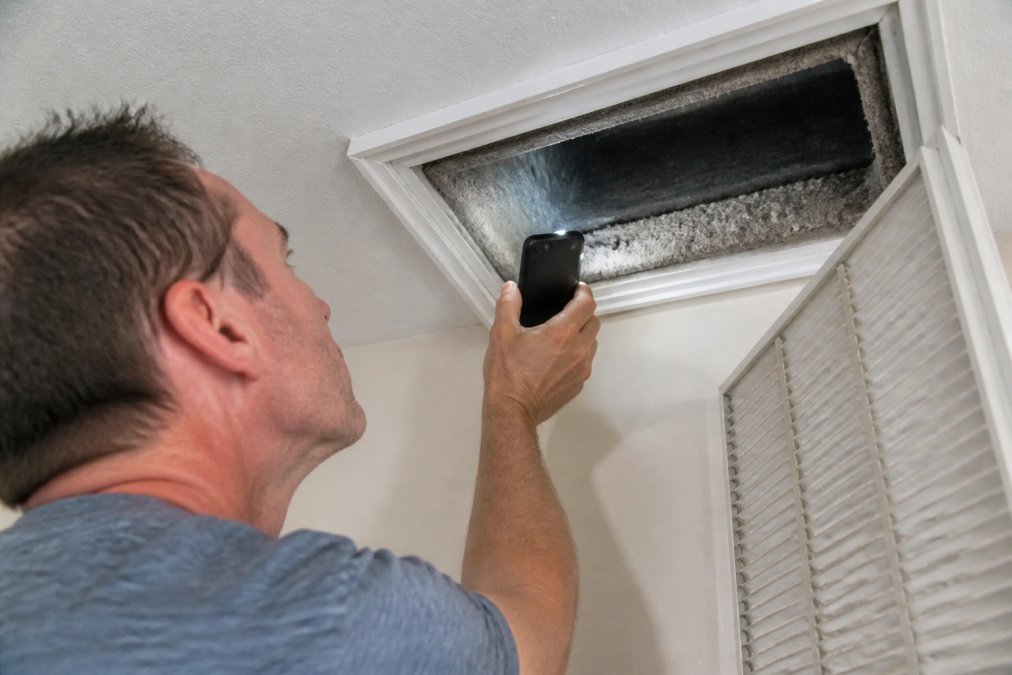
Work through this checklist before calling any provider:
- Visible mold growth inside the ductwork or on other HVAC system components; this requires mold remediation, not just cleaning
- Ducts infested with rodents or insects, which leave droppings and dander that become airborne contaminants
- Ducts clogged with excessive dust and debris that release particles into your living space through the vents
- Family members experiencing unexplained respiratory health symptoms that improve when away from the home
- A recent home renovation that generated significant dust, drywall particles, or sawdust that entered the duct system
- Noticeable airflow restriction from supply and return vents, suggesting partial blockages within the ductwork
A common mistake is assuming that dark streaks around vent covers indicate dirty ducts. Those streaks are usually caused by air filtration at the vent face, not contamination inside the duct system, and cleaning the ducts will not remove them. The filter is your duct system’s primary defense, and a clogged or poorly fitted filter creates the debris accumulation that later justifies duct cleaning.
How Often Should Air Ducts Be Cleaned?
There is no universal schedule for duct cleaning, and any company that claims you need it annually is likely prioritizing revenue over your home’s actual condition. The EPA does not recommend a specific frequency, noting that duct cleaning becomes necessary only when specific conditions are present.
A practical guideline for most households is to inspect your duct system every three to five years and clean it only when the visual checklist reveals a genuine problem. Homes with certain characteristics may need attention more often:
- Households with pets that shed heavily, where pet dander accumulates in the ductwork
- Homes with smokers or occupants with severe allergies or asthma
- Properties that have undergone recent renovations or remodeling
- Homes in areas with high particulate matter from construction or heavy traffic
The distinction that matters is between routine maintenance and problem-driven cleaning. Preventative maintenance, including regular filter replacement every one to three months and annual HVAC system inspections, prevents most debris accumulation before it becomes a duct problem. Professional duct cleaning addresses problems that maintenance cannot fix.
The Air Duct Cleaning Process Explained
Professional air duct cleaning is a mechanical process that uses specialized equipment to dislodge and extract contaminants from the entire duct system, not just the visible portions near the vents. A reputable provider follows standards established by the National Air Duct Cleaners Association standards, which define the proper methods for cleaning supply and return vents, the air handler, and all connected ductwork.
The process typically involves four stages:
- Inspection: The technician examines the system to identify contamination and locate all access points
- Agitation: A rotary brush cleaning system or compressed air tool dislodges debris adhered to duct walls
- Extraction: A high-powered vacuum with negative air pressure captures loosened contaminants, preventing them from entering living spaces
- Component cleaning: The air handler, coil cleaning, and vent covers are cleaned to prevent immediate recontamination
A thorough cleaning also addresses the air handler and coil, which are common sites of microbial growth and a frequent source of odors. If a provider only cleans the visible duct runs without touching the air handler, the system will recontaminate quickly.
Expect the process to take two to four hours for a typical home, depending on the number of vents and the extent of contamination.
DIY vs. Professional Equipment: What You Can Actually Do
DIY duct cleaning cannot achieve professional results because the equipment required is fundamentally different in capability. Household vacuums lack the suction power and negative air pressure containment needed to extract debris from deep within ductwork, and attempting to clean ducts with a shop vacuum often just redistributes dust deeper into the system.
What you can reasonably do yourself as part of a home maintenance schedule includes:
- Replacing filters on schedule, typically every one to three months
- Vacuuming vent covers and the immediate area around supply and return vents
- Keeping the area around the air handler clear of clutter and debris
- Sealing visible gaps in accessible duct joints with metal tape
Professional equipment, including rotary brush systems, compressed air tools, and truck-mounted vacuums with negative air pressure, is designed to clean the entire duct system without releasing contaminants into your home. The EPA guidance on who should clean ducts is clear that if you choose to have ducts cleaned, you should hire a professional who uses the proper equipment and follows industry standards.
DIY duct cleaning also carries a risk of damage. Poking tools into flexible ductwork can tear it, and aggressive vacuuming can collapse thin metal ducts, creating airflow restriction that reduces system performance and energy efficiency.
Why Renovations Trigger a Need for Duct Cleaning
Home renovations are one of the clearest triggers for professional duct cleaning, yet most homeowners overlook the duct system until after the dust has settled. Construction activities generate fine particulate matter, including drywall dust, sawdust, and volatile organic compounds from paints and adhesives, and your HVAC system will draw these contaminants into the ductwork if it runs during or shortly after the work.
What most guides skip is the post-renovation decision protocol, the specific steps that tell you whether you need a full duct cleaning or just a filter change.
The Post-Renovation Assessment Checklist
Use this sequence within 48 hours after construction dust settles, before you move furniture back or occupy the space fully:
- Check the filter first. Remove your HVAC filter and hold it up to a bright light. If you cannot see light through the pleats, the filter captured a significant load. Replace it immediately, then run the system for 24 hours and check the new filter again. If the second filter shows heavy loading within a day, debris has bypassed the first filter and settled deeper in the system.
- Inspect the return vent plenum. The return side of your system is the intake path, and it accumulates the heaviest construction debris. Remove the return vent cover and shine a flashlight into the plenum, the metal box directly behind the vent. A visible coating of drywall dust or sawdust here is a strong signal that the entire duct path needs professional attention.
- Run the “white glove” test on supply vents. Wipe the inside edge of a supply vent opening with a white microfiber cloth. If you see fine gray or tan dust transfer, that is drywall or joint compound dust that has settled in the duct runs. A light dusting may clear with filter changes; a visible layer means the debris will continue recirculating for months.
- Check for airflow asymmetry. Hold your hand over each supply vent while the system runs. If one room’s vents feel noticeably weaker than others, construction debris may have partially blocked a duct run, a condition that no filter change will fix.
Drywall Dust Is the Specific Problem
Drywall dust is not like ordinary household dust. Its particle size is fine enough to pass through standard MERV 8 filters, and it has a static charge that makes it adhere to duct walls and coil fins. Once it coats the evaporator coil, it forms an insulating layer that reduces heat transfer efficiency and can lead to frozen coils in summer. This is why post-renovation duct cleaning is about protecting the mechanical components of your HVAC system.
The “Filter-Only” Alternative
If your renovation was minor, a single room painted, or small patching work, and you sealed the vents with plastic sheeting before work began, a filter-only approach is often sufficient. Run the system in fan mode for several hours with a fresh MERV 11 filter, then replace that filter. This flushes the small amount of debris that entered the system without the expense of a full duct cleaning.
When Professional Cleaning Is Non-Negotiable
Professional duct cleaning is the right call after renovations that involved any of the following:
- Full demolition of walls or ceilings anywhere in the home
- Sanding of joint compound or drywall mud
- Cutting of materials with a saw inside the living space
- Spray painting or application of oil-based finishes
- Any work that generated visible dust clouds that traveled beyond the immediate work area
The timing matters: schedule the cleaning after the renovation is fully complete, including final cleanup and any new flooring installation. Cleaning before the renovation finishes means the ducts will simply be recontaminated by the remaining work.
If you are planning a renovation, the smart approach is prevention rather than cleanup. Seal off supply and return vents with plastic sheeting and tape before work begins, and run the HVAC system only in fan mode with a fresh filter if temperature control is necessary. This prevents most debris from entering the duct system in the first place, and it is far cheaper than a post-renovation cleaning.
The Cost-Benefit: Is It Worth the Investment?
The value of professional duct cleaning depends entirely on whether your home has one of the specific conditions that justify it, not on the general promise of cleaner air. If you have visible mold, pest infestation, or severe debris accumulation from renovations, the cost of cleaning is a reasonable investment in your home’s air quality and system performance. avoiding unnecessary HVAC repairs.
What you are paying for is not just the removal of visible dust but the extraction of contaminants that affect respiratory health and allergen reduction. Dust mites, pet dander, and mold spores that accumulate in ducts can become airborne whenever the system runs, and for households with allergy sufferers, removing that reservoir of irritants can produce noticeable improvements.
A Realistic Framework for Evaluating the Investment
The honest limitation is that duct cleaning does not improve indoor air quality for homes without a specific contamination problem. If your ducts are reasonably clean and your filter is doing its job, professional cleaning will not make a measurable difference, and the money is better spent on a higher-quality filter or an HVAC system tune-up.
To decide whether the investment makes sense for your home, work through this three-part evaluation:
1. Identify the specific contaminant. Duct cleaning delivers measurable value only when there is a defined problem: visible mold, rodent or insect infestation, construction debris, or a thick layer of dust that is actively being released into living spaces. If you cannot name the contaminant, cleaning is unlikely to change anything you will notice.
2. Estimate the exposure pathway. The benefit of cleaning comes from removing contaminants that become airborne whenever the system runs. If your ducts are contaminated but the debris is settled and undisturbed, the health impact may be minimal. The exposure pathway matters, cleaning matters most when the system actively circulates the contaminant into your breathing air.
3. Consider who is breathing the air. The value of cleaning is highest in homes with infants, elderly occupants, or people with asthma, allergies, or compromised immune systems. For these households, removing a reservoir of dust mites, pet dander, or mold spores can reduce symptom triggers. For a household of healthy adults with no specific sensitivities, the measurable benefit is often negligible.
What Cleaning Will and Will Not Do
| What duct cleaning can reasonably achieve | What duct cleaning will not do |
|---|---|
| Remove visible debris and dust accumulations from duct walls | Eliminate the need for regular filter replacement |
| Reduce airborne particulates from a known contamination source | Cure allergies or asthma |
| Eliminate odors caused by microbial growth in the duct system | Remove dust from your living space, only the ducts are cleaned |
| Improve airflow if debris is physically blocking duct runs | Compensate for an undersized or poorly designed HVAC system |
| Remove construction dust after renovations | Prevent future dust accumulation without maintenance |
The Hidden Cost of Not Cleaning
When duct cleaning is genuinely warranted, delaying it has real costs. Debris accumulation restricts airflow, forcing your blower to work harder and increasing energy consumption. Mold growth on the evaporator coil reduces heat exchange efficiency and can shorten the lifespan of the system. For households with allergy sufferers, ongoing exposure to a reservoir of irritants can mean higher medication costs and more sick days.
How to Think About the Price You Are Quoted
Pricing for duct cleaning depends on the size of your home, the number of vents, and the extent of contamination, so the most reliable way to know what you will pay is to request a quote from a provider who inspects your system first.
The right question is not “Is duct cleaning worth it?” but “Does my home have a specific condition that duct cleaning will fix?” If the answer is yes, the investment is justified. If the answer is no, the money is better spent on filter replacements and system maintenance, and any provider who tells you otherwise is not acting in your interest.
How to Identify a Reputable Duct Cleaning Provider
The duct cleaning industry has a reputation problem, and much of it is earned by companies that use loss-leader pricing to get in the door and then upsell unnecessary services. The Federal Trade Commission consumer alert on duct cleaning warns consumers to be wary of providers who make sweeping health claims or offer suspiciously low prices, and the same guidance recommends verifying that a provider follows NADCA standards and uses proper equipment.
Use these criteria when evaluating any provider:
- Verify that technicians are trained to recognized industry standards, such as those set by the National Air Duct Cleaners Association
- Confirm that the provider will clean the entire system, including the air handler and coil, not just the visible duct runs
- Ask whether they use negative air pressure equipment to contain contaminants during the cleaning process
- Request a visual inspection before the work begins and photographic documentation after it is complete
- Be suspicious of providers who quote a flat price without inspecting your system or who claim duct cleaning is needed annually
A reputable provider will also be honest about whether your ducts actually need cleaning. If the inspection does not reveal mold, infestation, or significant debris, the provider should tell you that cleaning is not necessary rather than pushing an unneeded service.
For homeowners in New Jersey, PowerPro Carpet Cleaning has provided residential and commercial cleaning services since 1989, and our technicians are trained to Inspection Institution of Cleaning and Restoration standards. We offer air duct cleaning as part of a comprehensive approach to healthier indoor air.
Avoid any provider that offers duct cleaning at an extremely low promotional price and then pressures you into additional services once inside your home. This is the most common scam pattern in the industry, and the low price is designed to get a foot in the door, not to deliver a complete cleaning.
Conclusion: Making the Call for Your Home
The decision to schedule professional air duct cleaning comes down to evidence, not marketing. If your visual inspection reveals mold growth, pest contamination, or significant debris from a recent renovation, cleaning is a justified investment. If your ducts show no signs of these problems, regular filter replacement and system maintenance are the more sensible use of your money.
At PowerPro Carpet Cleaning, we have served New Jersey homeowners since 1989 with organic, low-water cleaning methods that promote a healthier home environment. Our technicians are trained to Inspection Institution of Cleaning and Restoration standards, and we provide air duct cleaning. Call us at 848 347 3201 to schedule an inspection and get an honest assessment of whether your ducts need professional attention.
Frequently Asked Questions
Is air duct cleaning a rip-off?
It can be if you hire a company that uses scare tactics or offers $99 specials. Legitimate providers follow NADCA standards and perform a visual inspection before recommending service. If there’s no visible mold growth, debris, or rodent infestation, cleaning may not be necessary. Ask for specifics about what they found and request photo evidence before approving any work.
What are the downsides to air duct cleaning?
Improper cleaning can damage ductwork or release more particulate matter into your living space. If a technician uses inadequate equipment or fails to maintain negative air pressure, contaminants can escape into your home. Choose a provider who follows the air duct cleaning process explained in this guide, including sealing vents to contain debris.
How can I tell if my air ducts actually need to be cleaned?
Look for the signs you need air duct cleaning: visible mold growth inside ducts or on other HVAC components, dust particles blowing from supply registers, unexplained allergy symptoms that improve outside, or evidence of rodents or insects. If you’ve completed renovations involving drywall or woodwork, debris in the ductwork is likely. When none of these signs are present, routine cleaning is rarely necessary.
Does air duct cleaning improve indoor air quality?
When ducts contain significant contaminants like mold spores, dust mites, or construction debris, professional air duct cleaning can improve indoor air quality. The benefit is most noticeable for households with respiratory health concerns or allergies. However, for homes with clean ducts, the impact is minimal. Regular filter replacement and preventative maintenance often provide more measurable air quality improvement than duct cleaning alone.