Table of Contents
- Why Your Carpet Feels Sticky After Cleaning
- How to Remove Soap Residue from Carpet
- Carpet Re-Soiling Causes: Why Dirt Comes Back Fast
- How Long Does Carpet Take to Dry After Cleaning?
- The Role of pH in Carpet Cleaning Residue
- Fiber Sensitivity: Which Carpets Trap Residue Worst
- Equipment Maintenance and Residue Transfer
- Visual Identification Guide: Spotting Residue Before It Sets
- Conclusion: Building a Residue-Free Cleaning Routine
- Frequently Asked Questions
Last Updated: October 2, 2026
Why Your Carpet Feels Sticky After Cleaning
That tacky, stiff feeling under your feet is carpet cleaning residue, and it is one of the most common complaints homeowners bring to us at PowerPro Carpet Cleaning. The carpet looks clean, but it feels wrong. Within days, it looks dirty again.
Carpet cleaning residue is the leftover film of soap, detergent, or cleaning solution that stays trapped in the carpet fibers after a wash. It happens when a cleaner uses too much product, skips the rinse step, or leaves too much water behind.
The result is a carpet that attracts dirt instead of repelling it. Here is what most guides get wrong: they blame the dirt. The real problem usually sits in the fibers themselves.
Below, we break down what residue is, how to remove it, and how to avoid the cycle entirely.
What Carpet Cleaning Residue Actually Is
Residue is the dried film left behind when a cleaning agent is not fully rinsed out of the carpet pile. Most liquid cleaners rely on surfactants, the compounds that lift soil from fibers. Surfactants are sticky by design. If they stay in the carpet, they keep grabbing at anything that touches them.
That is why a freshly cleaned carpet can feel gummy within a day. The fibers are coated, not clean.
A simple residue test tells you a lot: press a damp white cloth into the carpet and step on it for a few seconds. If the cloth comes up with a soapy or cloudy mark, you have buildup.
Skipping the rinse step is the fastest way to create a dirt-attracting film. Many rental machines and DIY kits leave residue behind because they clean and rinse with the same tank of water.
How to Remove Soap Residue from Carpet
Removing soap residue from carpet comes down to one thing: flushing the fibers with clean water until nothing is left behind. You are not cleaning the carpet again. You are rinsing it.
Follow these steps:
- Dry vacuum first. Run a slow, overlapping pass to pull up loose soil and dried film.
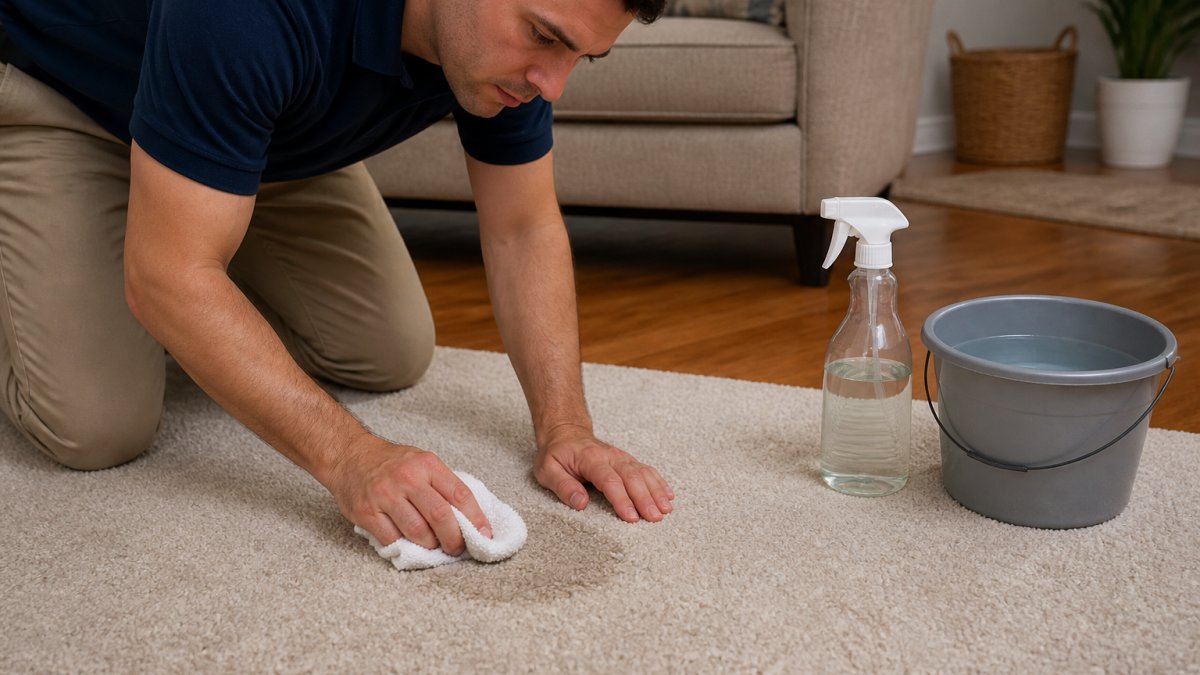
- Mix a diluted vinegar solution. Use about one cup of white vinegar per gallon of warm water.
- Apply lightly. Mist the carpet. Do not soak it.
- Blot, do not scrub. Press a clean microfiber cloth into the pile and lift.
- Rinse with plain water. Repeat with a fresh, damp cloth until no soapy mark appears.
- Dry fast. Run fans or open windows to pull moisture out of the carpet backing.
The Vinegar Rinse Method
The vinegar rinse works because vinegar is mildly acidic. Most soaps are alkaline, so the acid helps neutralize the leftover film. It is a cheap, low-risk first step for mild buildup.
It is not a cure-all. Heavy detergent buildup or old, set-in residue often needs a proper rinse cycle with a professional extraction machine. Vinegar loosens the film; only clean water and suction remove it.
If you have tried the vinegar rinse twice and the carpet still feels sticky, stop. More home rinsing can push moisture into the carpet backing, which is where real problems start.
Carpet Re-Soiling Causes: Why Dirt Comes Back Fast
Carpet re-soiling causes almost always trace back to something left in the fibers or too much moisture trapped below them. When a carpet gets dirty again within a week, the cleaning did not fail. The rinse did.
The main culprits:
- Detergent buildup that never got flushed out
- Over-saturation that soaked the backing and pad
- Wicking, where moisture pulls buried soil up to the surface as it dries
- Alkaline cleaner left unneutralized
- Incomplete extraction that leaves water and soap behind
Wicking is the one most people miss. You clean the top of the carpet, but the soil in the pad and backing dissolves in the water and rises as the carpet dries. Two days later, brown spots appear.
If spots return in the same places every time, it is usually wicking, not new dirt. A slow, thorough extraction with proper drying fixes it. A quick surface clean never will.
How Long Does Carpet Take to Dry After Cleaning?
Most carpets dry in 6 to 12 hours after a professional low-water cleaning, and 24 hours or more after a heavy soak from a DIY rental machine. But the number that matters is not the surface dry time, it is how long the backing and pad stay wet, because that is where residue problems are actually created.
Why Drying Time Drives Residue Formation
Residue does not just sit on top of the pile. When a carpet is over-wetted, water carries dissolved detergent down past the pile and into the backing and pad. As the carpet dries from the top down, that moisture wicks back upward, carrying the detergent with it. The result is a fresh sticky film deposited on fibers that were already rinsed, which is why a carpet can feel tacky again two days after a cleaning that looked fine on day one.
The slower the dry, the more complete that wicking cycle is. A carpet that dries in six hours wicks far less detergent back to the surface than one that stays damp for a full day. This is the mechanism most drying-time advice ignores.
What Actually Controls Dry Time
Four variables determine how fast a carpet dries:
- How much water was applied. A low-moisture or low-water method uses a fraction of the water a traditional steam soak does. Less water in means less water to remove.
- How much water was extracted. A machine with strong vacuum lift pulls most of the applied water back out immediately. A weak or worn machine leaves it behind.
- Airflow across the pile. Box fans and ceiling fans move saturated air away from the surface. Without airflow, the carpet sits in its own humid microclimate.
- Ambient humidity and temperature. A damp basement in July dries far slower than a conditioned living room in October. Running the air conditioning or a dehumidifier pulls moisture out of the air and speeds the process.
Practical Drying Protocol
- Run fans continuously for the first four to six hours, aimed across the carpet surface rather than straight down.
- Open windows only if outdoor humidity is lower than indoor humidity. Otherwise you are adding moisture, not removing it.
- Run a dehumidifier in the room if one is available.
- Keep foot traffic off the carpet until it is dry to the touch at the backing, not just the surface.
- Blot any standing moisture immediately, do not let it soak back in.
A simple test: press a dry paper towel firmly into the carpet and hold for ten seconds. If the towel feels cool or damp, the backing is still wet even if the surface feels dry. Keep the fans running.
The Low-Moisture Advantage
Low-moisture cleaning methods use significantly less water than traditional steam soaking, which is why carpets cleaned this way often dry in a few hours rather than a full day. Faster drying means less wicking, less detergent pulled back to the surface, and a much lower risk of the sticky-carpet cycle restarting.
If your carpet is still damp at the backing after 24 hours, the cleaning method, not the weather, is the problem.
The Role of pH in Carpet Cleaning Residue
The pH of your cleaning agent decides whether residue turns sticky or rinses away clean. This is the angle most cleaning guides skip, and it is the one that explains stubborn buildup.
Here is the short version. Most soils and many cleaners are alkaline. If you clean with an alkaline cleaner and never bring the carpet back toward neutral, the film stays tacky and keeps pulling in soil.
| Cleaner Type | pH Range | Residue Risk | Best Use |
|---|---|---|---|
| Alkaline detergent | High | High if not rinsed | Heavy soil, grease |
| Neutral cleaner | Around 7 | Low | Routine cleaning |
| Mildly acidic rinse | Low | Low | Neutralizing soap film |
A neutralizing agent or a mild acid rinse brings the fibers back to a balanced pH level. That step is what stops the sticky film from forming in the first place.
What most people do not realize: a cleaner can be strong and still rinse clean. The trick is matching the product to the soil, then always finishing with a proper rinse.
Fiber Sensitivity: Which Carpets Trap Residue Worst
Not all carpet fibers hold onto residue the same way. Fiber type changes how easily soap and water release from the pile, and it changes how much cleaning a carpet can take before it is damaged.
The worst offenders:
- Wool and natural fibers absorb liquid deeply and can be harmed by alkaline cleaners.
- Loop pile and Berber trap soil and soap in the tight loops.
- Cut pile releases residue more easily but still needs a full rinse.
Synthetic fibers like nylon and polyester tolerate more cleaning but still hold a film if the rinse is skipped.
If you have chemical sensitivity in the home, this matters even more. Leftover residue can hold odors and irritants in the fibers long after the cleaning is done. A soap-free cleaning approach with a thorough rinse is the safer path.
Fiber type decides how you clean, not just how often. A wool rug and a nylon carpet need different products, different pH levels, and different drying times.
Equipment Maintenance and Residue Transfer
Dirty equipment spreads residue instead of removing it. This is a gap most homeowners never think about, and it quietly ruins otherwise good cleanings.
The parts that matter most:
- Dirty tanks that mix old soapy water with fresh rinse water
- Clogged or worn jets that spray unevenly and leave wet patches
- A weak vacuum motor that cannot pull water out of the pile
- Dirty wand heads and hoses that transfer film from job to job
If extraction power drops, water and soap stay in the carpet. That is how a machine that once cleaned well starts leaving sticky carpets. Regular flushing of lines, checking jet spray patterns, and replacing worn seals keeps a machine rinsing clean.
For DIY renters, this is a real risk. Rental units are used hard and serviced rarely. A machine with a weak extraction pull will leave more water and residue than it removes.
Visual Identification Guide: Spotting Residue Before It Sets
You can spot residue before it becomes a problem if you know what to look for. Catching it early saves a full re-clean.
Look for these signs:
- Stiff or crunchy patches in high-traffic areas
- A dull, grayish sheen instead of a clean, even color
- Footprints that stay visible after you walk across the carpet
- A sticky feel when you press your palm into the pile
- Fast re-soiling in the same spots within days
- Brown rings or spots that appear as the carpet dries
The damp cloth test is the most reliable check. If the cloth lifts a soapy film, the carpet needs a proper rinse, not another round of soap.
Conclusion: Building a Residue-Free Cleaning Routine
The real challenge is not getting a carpet clean once. It is keeping residue out of the fibers so the clean actually lasts. Most sticky-carpet problems come from too much soap and too little rinsing, not from too little cleaning.
At PowerPro Carpet Cleaning, we have built our process around exactly that problem. Our family-owned team has served homes and businesses since 1989, using organic, green-certified solutions and a low-water method that dries within hours. Every job finishes with a thorough rinse, so no dirt-attracting film is left behind, and our technicians are trained to Inspection Institution of Cleaning and Restoration standards.
If your carpet feels sticky, looks dirty again too fast, or takes a full day to dry, the residue is the likely cause. Call us at 848 347 3201 and we will get your carpet clean, dry, and residue-free.
Frequently Asked Questions
How can I tell if there is soap residue left in my carpet?
Press a clean white towel into the carpet and rub firmly for a few seconds. If the towel picks up a slick, soapy film or feels stiff when it dries, residue is present. You can also run your fingers across the pile: sticky or tacky fibers usually mean leftover detergent. A simple pH test strip pressed into a damp section will show whether the carpet is still alkaline from cleaning solution. Any of these signs means a plain-water rinse is needed before the next deep clean.
Does carpet cleaning residue cause carpets to get dirty faster?
Yes. Leftover detergent forms a sticky film on carpet fibers that grabs soil the way a lint roller grabs hair. Every footstep pushes grit into that film, so the carpet looks dull again within days instead of weeks. This is the main reason carpet re-soiling causes homeowners to think a cleaning job failed. Removing the film with a clean-water rinse, or choosing a low-residue method from the start, breaks that cycle and keeps the carpet cleaner longer.
What is the best carpet cleaner solution that doesn’t leave residue?
Look for soap-free or encapsulation cleaners, which crystallize and vacuum away instead of leaving a film. Check the label for a neutral pH near 7 and avoid products heavy in surfactants unless you plan to rinse thoroughly. Powder and low-moisture systems also leave less behind because they use very little water. Whatever you choose, follow the dilution ratio on the bottle exactly. Over-concentrated solution is the most common cause of sticky residue, even with good products.
How do professional cleaners prevent residue buildup?
Trained technicians use a rinse-extraction pass with plain water after the cleaning solution, so no detergent stays in the pile. They also match the cleaner to the fiber type, control pH with a neutralizing agent, and keep extraction equipment maintained so dirty water leaves the carpet instead of recirculating. In Monmouth County and across central New Jersey, PowerPro Carpet Cleaning applies these steps with organic, low-water methods that dry in hours. Call 848-347-3201 to schedule a residue-free clean.