Table of Contents
- Carpet Cleaning vs Tile and Grout Cleaning Services: Key Differences
- How Carpet Cleaning Differs from Tile and Grout Cleaning
- Professional vs. DIY Cleaning Methods
- Residential Tile and Grout Cleaning: Expert Tips
- How to Tell If Your Grout Needs Professional Cleaning
- Benefits of Professional Tile and Grout Sealing
- Cost Comparison: Professional Services vs. DIY
- Signs Your Floors Need Professional Attention
- Extending the Lifespan of Flooring Materials
- Health and Allergen Benefits of Professional Cleaning
- Frequently Asked Questions
Last Updated: September 19, 2026
Carpet Cleaning vs Tile and Grout Cleaning Services: Key Differences
When comparing carpet cleaning vs tile and grout cleaning, you’ll find they require fundamentally different equipment, techniques, and approaches. What works on carpet damages tile, and what cleans grout won’t restore carpet fibers.
Carpet relies on deep extraction and fiber agitation to remove soil and allergens trapped in the pile. Tile and grout demand high-pressure cleaning and chemical dwell time to penetrate porous surfaces and restore discolored lines. Using the wrong approach wastes money and damages floors.
Equipment rental companies push generic methods that don’t work well for either surface. Professional services use specialized tools designed for specific materials, directly affecting floor longevity and cleanliness.
How Carpet Cleaning Differs from Tile and Grout Cleaning
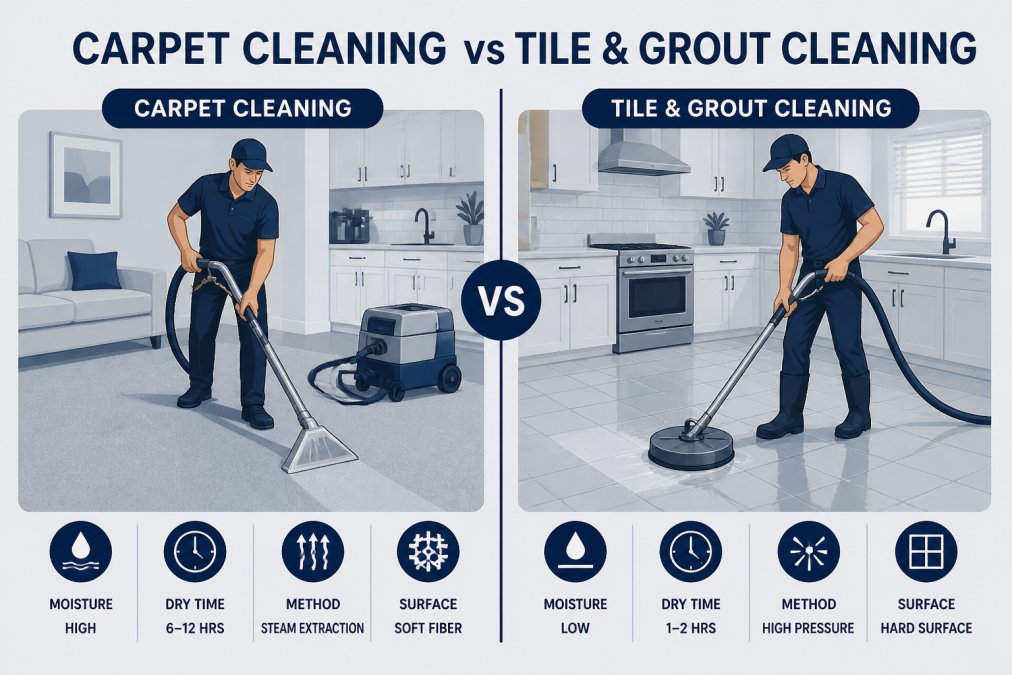
Carpet fibers hold soil deep within the pile, requiring extraction methods that pull water and contaminants upward. Tile and grout are porous materials where dirt settles into microscopic crevices and becomes permanent without sealing.
Equipment and Extraction Methods
Carpet cleaning uses steam extraction paired with powerful vacuum extraction. The equipment injects heated water into the pile, agitates fibers to loosen soil, then extracts dirty water.
Tile and grout cleaning requires high-pressure systems that force water into grout lines at thousands of PSI, physically dislodging embedded dirt while avoiding damage to tile or substrate.
A carpet cleaner using high-pressure methods on tile will crack grout and force water into the foundation. A tile system won’t restore carpet because it can’t agitate fibers or provide controlled moisture extraction.
Surface Preparation and Chemical Dwell Time
Carpet cleaning uses pre-treatment solutions with short dwell time (5-10 minutes). Extended dwell time causes fiber degradation and residue that attracts dirt faster.
Tile and grout cleaning requires longer chemical dwell time (15-30 minutes) for solutions to penetrate grout and break down mineral deposits, mold, and staining. Rushing leaves visible discoloration.
| Cleaning Method | Dwell Time | Equipment Focus | Primary Goal |
|---|---|---|---|
| Carpet cleaning | 5-10 minutes | Steam extraction, vacuum | Fiber agitation and moisture removal |
| Tile and grout | 15-30 minutes | High-pressure, rotary scrubbing | Chemical penetration and soil suspension |
Professional vs. DIY Cleaning Methods
The gap between DIY and professional results is wider for tile and grout than for carpet, but the reasons are rooted in material science and equipment limitations that most homeowners don’t understand.
Why DIY Carpet Cleaning Falls Short
Rental machines extract at 60-80 PSI, while professional systems operate at 200+ PSI with water temperatures of 200-210°F. This difference affects moisture control, fiber stress, chemical residue, and stain setting.
Rental equipment leaves carpets wetter, creating mold and mildew growth within 24-48 hours. Professional technicians control extraction timing to prevent moisture damage.
Aggressive scrubbing causes fiber matting and frizzing. Professional cleaning adjusts agitation intensity based on fiber type.
Generic rental solutions aren’t pH-balanced for specific carpet types. Residue accelerates re-soiling, making DIY-cleaned carpets look dirty again within 2-3 weeks.
Hot water applied to protein-based stains without the right surfactant sets stains permanently. Homeowners often worsen stains with DIY removal.
Why DIY Tile and Grout Cleaning Almost Always Fails
DIY tile and grout cleaning is fundamentally limited by three factors:
Grout is porous, with discoloration penetrating 1/8 to 1/4 inch deep. Handheld scrubbers clean only the top 1/32 inch. Homemade solutions lack the chemical dwell time and pH balance needed. Bleach lightens surface stains temporarily but doesn’t remove underlying discoloration and weakens grout over time.
Pressure washers are dangerous for residential tile. Excessive pressure (over 1500 PSI) blows out grout lines, cracks tile, forces water into substrate, and etches natural stone. Professional cleaning uses calibrated pressure (500-1200 PSI) with proper nozzle distance and angle.
Different tile types require different approaches. Glazed ceramic handles higher pressure than unglazed porcelain. Natural stone requires pH-neutral solutions and low pressure. DIY users apply one method to all surfaces, causing damage.
The Hidden Cost of DIY Failure
Many homeowners attempt DIY tile and grout cleaning, fail to achieve results, then hire a professional to fix both the original problem and any damage caused by the DIY attempt. This doubles the cost. Grout damage from pressure washing, for example, requires grout removal and re-grouting, a repair that costs significantly more than professional cleaning would have cost initially.
Professional Equipment Advantage
Professional-grade equipment isn’t just more powerful; it’s purpose-built for specific surfaces:
- Truck-mounted extraction systems for carpet use heated water, chemical injection, and dual-vacuum extraction in a single pass, removing moisture far more effectively than portable units.
- Rotary scrubbers for tile use variable-speed heads and pressure-sensitive pads that adjust to surface hardness, preventing damage while maximizing cleaning action.
- Grout-specific tools include oscillating grout saws, high-pressure jets with adjustable nozzles, and chemical applicators that control dwell time precisely.
- Water recovery and filtration systems allow professionals to recycle water and remove contaminants, reducing environmental impact and water usage compared to DIY methods.
These tools are expensive (professional truck-mounted systems cost $15,000-$40,000) and require training to use safely. Rental equipment is a fraction of the cost but lacks the precision and power needed for deep cleaning or damage prevention.
Residential Tile and Grout Cleaning: Expert Tips
Professional tile and grout cleaning starts with assessment. Different tile materials, ceramic, porcelain, natural stone, require different approaches. Grout type also varies: unsealed grout absorbs stains easily, while sealed grout requires gentler pressure to avoid damaging the seal.
The first step is always inspection. A professional identifies the tile material, grout condition, and any existing damage before beginning. This prevents mistakes that could cost thousands in repairs. Many homeowners skip this step and end up with etched marble or cracked grout.
Pre-treatment is essential. Applying the right solution and allowing adequate dwell time makes the difference between partial cleaning and complete restoration. Some stains need acidic solutions, others need alkaline. Using the wrong chemistry can set stains permanently.
High-pressure cleaning follows pre-treatment. The pressure must be calibrated for the specific tile and grout. Too much pressure damages grout or cracks tile. Too little pressure leaves soil behind. Professional technicians know these variables and adjust accordingly.
How to Tell If Your Grout Needs Professional Cleaning
Grout discoloration is the most obvious sign. If your grout has darkened, developed black or brown stains, or shows visible mold growth, it needs professional attention. Surface-level dirt can sometimes be cleaned with a brush, but deep discoloration indicates soil suspension or mold that DIY methods won’t address.
Check the grout lines closely. Run your finger across them, if grout crumbles or feels soft, it’s compromised and needs professional evaluation before cleaning. Sealed grout should feel smooth and hard. If it feels porous or chalky, the seal is failing and professional cleaning with re-sealing is necessary.
Water staining around grout lines suggests mineral buildup from hard water. This requires chemical treatment to dissolve mineral deposits. Bleach won’t work; you need pH-balanced solutions designed for mineral removal.
Mold or mildew in grout is a health concern, not just an aesthetic issue. Black mold in grout spreads quickly and can affect indoor air quality. Professional cleaning with proper sanitization prevents mold from returning, especially when followed by grout sealing.
Benefits of Professional Tile and Grout Sealing
Grout sealing is the most overlooked maintenance step. Unsealed grout is porous and absorbs water, dirt, and stains. Sealed grout resists staining and mold growth, extending the lifespan of your tile floor by years.
The sealing process happens after professional cleaning. Once grout is clean and dry, a penetrating sealer is applied. This sealer fills the porous structure of the grout, creating a barrier against moisture and contaminants. Quality sealers last 1-3 years, depending on foot traffic and moisture exposure.
Sealed grout is dramatically easier to maintain. Spills don’t penetrate the grout, so they can be wiped away before staining occurs. Mold and mildew growth slows significantly because grout no longer absorbs moisture. High-traffic areas stay cleaner longer.
The cost of sealing is minimal compared to the cost of replacing discolored or damaged grout. Professional sealing also provides warranty protection, if staining occurs within the warranty period, the sealer can be reapplied at no charge.
Cost Comparison: Professional Services vs. DIY
Cost analysis requires looking beyond the initial service price to total cost of ownership, including repeat cleanings, damage repairs, and lifespan extension.
DIY Carpet Cleaning Costs
Rental carpet cleaning equipment typically costs $40-$75 per day, plus cleaning solution ($15-$30). For a 1,500 sq ft home, a DIY cleaning takes 4-6 hours. The math seems attractive initially, under $100 for a whole-house cleaning.
However, hidden costs emerge quickly:
Repeat cleanings: DIY extraction typically leaves 30-40% more moisture in carpet than professional systems. This residue attracts dirt faster, requiring cleaning again within 3-4 weeks instead of 6-12 months. A homeowner who DIY cleans quarterly spends $400-$600 annually, plus their time. A professional cleaning every 6-12 months costs less overall and delivers longer-lasting results.
Mold remediation: Over-wetting causes mold growth in 24-48 hours, especially in basements, bathrooms, or humid climates. Professional mold remediation costs $500-$2,000+ depending on extent. This single incident can exceed the cost of professional carpet cleaning for an entire year.
Fiber damage: Aggressive DIY scrubbing causes matting and frizzing that shortens carpet lifespan. Carpet replacement costs $3-$10 per square foot installed, or $4,500-$15,000 for a typical home. Extending carpet life by 2-3 years through proper professional cleaning pays for itself many times over.
Stain setting: Incorrect DIY treatment can set stains permanently, requiring professional spot removal ($75-$150 per spot) or carpet replacement in that area.
DIY Tile and Grout Cleaning Costs
DIY tile and grout cleaning typically fails, leading to professional cleaning anyway. A homeowner might spend:
- Pressure washer rental: $50-$100 per day
- Cleaning solutions: $20-$50
- Time: 4-8 hours
- Result: Grout still discolored, possible grout or tile damage
Then they hire a professional to clean properly and repair damage. This doubles the cost. Grout damage from pressure washing requires professional grout removal and re-grouting, which costs $3-$12 per linear foot. For a 200 sq ft bathroom, that’s $600-$2,400 in repairs.
Professional Carpet Cleaning Costs and ROI
Professional carpet cleaning frequency is typically recommended every 6-12 months for high-traffic residential areas, and every 12-18 months for low-traffic areas. Pricing depends on the size of your home and the level of soil.
Annual cost: $200-$600 for typical household maintenance
Lifespan extension: Professional cleaning every 6-12 months extends carpet life by 2-5 years compared to DIY-only or infrequent professional cleaning. Since carpet replacement costs $4,500-$15,000, extending life by even 2 years saves thousands.
Health benefit: Allergen removal improves indoor air quality, reducing medical costs for families with allergies or asthma. While hard to quantify, this benefit is significant for households with respiratory sensitivities.
Professional Tile and Grout Cleaning Costs and ROI
Professional tile and grout cleaning is a one-time or occasional service, not a recurring maintenance item, unless grout is sealed. Pricing depends on square footage and soil level.
With sealing: Professional grout sealing costs $75-$200 for a typical bathroom and lasts 1-3 years depending on foot traffic and moisture exposure. Sealed grout resists staining and mold, reducing the need for repeat professional cleaning to every 2-3 years instead of annually.
Without sealing: Unsealed grout requires professional cleaning every 12-18 months to address new staining and mold growth. Over 10 years, this costs $1,000-$2,500 in cleaning alone.
With sealing: Professional cleaning once, then sealing, costs $225-$600 initially. Resealing every 2-3 years costs $75-$200. Over 10 years, total cost is $600-$1,400, less than unsealed grout and with dramatically better appearance and hygiene.
Grout replacement alternative: If grout is severely damaged or permanently discolored, replacement costs $5-$15 per linear foot. For a 200 sq ft bathroom with 100 linear feet of grout lines, replacement costs $500-$1,500. Professional cleaning and sealing is far cheaper and prevents the need for replacement.
Comparative Timeline: DIY vs. Professional Over 5 Years
DIY carpet cleaning (quarterly):
- Rental and supplies: $400-$600/year × 5 = $2,000-$3,000
- Mold remediation (1-2 incidents): $500-$2,000
- Possible carpet replacement due to damage: $4,500-$15,000
- Total: $7,000-$20,000+
Professional carpet cleaning (every 6-12 months):
- Service cost: $200-$600/year × 5 = $1,000-$3,000
- No mold remediation needed
- Carpet lifespan extended, no premature replacement
- Total: $1,000-$3,000
DIY tile and grout (attempted, then professional repair):
- Rental and supplies: $70-$150
- Professional cleaning to fix DIY damage: $150-$400
- Grout repair from pressure washer damage: $600-$2,400
- Total: $820-$2,950 (one-time)
Professional tile and grout cleaning with sealing:
- Initial cleaning and sealing: $225-$600
- Resealing every 2-3 years: $75-$200 × 2 = $150-$400
- Total over 5 years: $375-$1,000
The Bottom Line
Professional cleaning is more cost-effective than DIY over any timeframe longer than 6 months. The combination of better results, longer-lasting effects, damage prevention, and health benefits makes professional services the smarter financial choice for homeowners who want to protect their flooring investment and maintain a healthy home.
Signs Your Floors Need Professional Attention
Visible stains that don’t respond to spot cleaning indicate deep soil that requires extraction or high-pressure cleaning. Pet accidents, wine spills, or tracked-in dirt that sets for even a few days can become permanent without professional treatment.
Odors are another key sign. Carpet odors often indicate trapped moisture or bacterial growth. Grout odors suggest mold. Both require professional cleaning to address the root cause, not just mask the smell.
High-traffic areas show wear faster than other areas. Carpet in hallways and entryways becomes matted and discolored. Grout in kitchens and bathrooms develops dark stains from moisture and foot traffic. These areas benefit most from professional deep cleaning and, for grout, sealing.
Allergies or respiratory issues can worsen when floors harbor allergens. Carpet traps dust, pollen, and pet dander. Mold in grout releases spores into the air. Professional cleaning removes these contaminants, improving indoor air quality.
Extending the Lifespan of Flooring Materials
Regular professional cleaning is the single best investment in floor longevity. Carpet that’s cleaned professionally every 6-12 months resists fiber degradation and staining better than carpet cleaned only occasionally. Tile and grout that’s sealed and professionally maintained remain in good condition for decades.
Maintenance schedules matter. High-traffic residential areas benefit from professional carpet cleaning every 6 months. Lower-traffic areas can go 12 months. Tile and grout in kitchens and bathrooms should be professionally cleaned and sealed every 1-2 years.
Preventative maintenance is cheaper than restoration. Sealing grout before staining occurs costs less than removing permanent discoloration. Regular carpet extraction prevents fiber degradation that leads to premature replacement.
The type of flooring also affects maintenance frequency. Synthetic fibers are more resilient than natural fibers and can handle more aggressive cleaning. Natural stone tile requires gentler pressure and pH-balanced solutions. Understanding your specific flooring materials helps determine the right maintenance schedule.
Health and Allergen Benefits of Professional Cleaning
Carpet harbors allergens that vacuuming alone can’t remove. Dust mites, pet dander, pollen, and mold spores settle deep in the carpet pile. Professional steam extraction removes these contaminants, reducing allergen levels significantly.
This benefit is especially important for families with pets, children, or members with allergies or asthma. Professional cleaning improves indoor air quality by removing the sources of allergens rather than just covering them up with air fresheners.
Grout mold and mildew also affect indoor air quality. Mold spores released from bathroom or kitchen grout can trigger respiratory issues. Professional cleaning removes visible mold, and sealing prevents regrowth by eliminating the moisture that mold needs.
The sanitization that accompanies professional cleaning also matters. Professional-grade solutions kill bacteria and viruses more effectively than household cleaners. This is especially valuable in kitchens and bathrooms where foodborne pathogens and bathroom bacteria can accumulate.
Professional floor cleaning isn’t a luxury, it’s the most effective way to protect your investment and maintain a healthy home. Whether you’re dealing with stubborn carpet stains, discolored grout, or both, the right cleaning method makes all the difference. PowerPro Carpet Cleaning handles carpet, tile, and grout restoration in a single visit, using organic, low-water methods that clean deeply without the harsh chemicals or excessive drying time. Call us at 848-347-3201 to schedule your professional cleaning and see why homeowners across the region trust our family-owned business for results that last.
Frequently Asked Questions
How often should you have your carpet cleaning vs tile and grout cleaning done?
Carpet typically benefits from professional cleaning every 12-18 months in high-traffic areas, or more frequently in homes with pets or children. Tile and grout should be professionally cleaned every 1-3 years depending on foot traffic and moisture exposure. Grout sealing, when applied after professional cleaning, can extend the time between cleanings by protecting against staining and soil suspension in porous grout lines.
Can the same equipment be used for carpet and tile cleaning?
No. Carpet cleaning requires steam extraction or low-water methods that penetrate synthetic fibers and carpet pile without over-saturating. Tile and grout cleaning uses high-pressure cleaning, rotary scrubbing, and specialized grout cleaning tools to remove soil from porous surfaces and grout lines. Using the wrong equipment risks fiber degradation on carpet or inadequate deep cleaning on grout.
What are the benefits of professional tile and grout sealing?
Professional grout sealing creates a protective barrier that prevents staining, reduces grout discoloration, and minimizes moisture penetration into porous grout. This extends floor longevity, makes future cleaning easier, and prevents mold and mildew growth in moisture-prone areas. Sealed grout maintains surface integrity and reduces the frequency of professional deep cleaning needed.
Is carpet cleaning more expensive than tile and grout cleaning?
Pricing depends on square footage, soil level, and whether sealing is included. Carpet cleaning typically covers larger areas but uses different extraction methods. Tile and grout cleaning often requires specialized equipment and may include sealing services. For a complete comparison and current pricing for your specific needs, contact PowerPro Carpet Cleaning at 848-347-3201 for a customized quote.