Table of Contents
- Why Professional Tile and Grout Cleaning Benefits Your Home
- How Often to Clean Tile and Grout: Maintenance Schedules by Foot Traffic
- Professional Grout Sealing Benefits: Protection That Lasts
- DIY vs Professional Tile Cleaning: Equipment, Results, and Risks
- Healthier Indoor Air Quality and Allergen Reduction
- Mold, Mildew, and Bacteria Prevention in Grout Lines
- Restoring Original Appearance and Extending Floor Longevity
- The Professional Cleaning Process and Environmental Impact
- Frequently Asked Questions
Last Updated: September 24, 2026
Why Professional Tile and Grout Cleaning Benefits Your Home
Professional tile and grout cleaning benefits go well beyond a shinier floor. It restores the surface you walk on, removes what mops can’t reach, and protects the structure underneath. At PowerPro Carpet Cleaning, we’ve cleaned tile and grout across New Jersey since 1989, and the difference between a surface wipe and a deep extraction is visible the moment the floor dries.
Tile itself is durable. Grout is not. It’s a cement-based, porous material that absorbs everything spilled near it: grease, soap scum, pet accidents, and the fine grit tracked in from outside. Once soil settles into those pores, it keeps drawing in more. A damp mop pushes dirt deeper and leaves a film that attracts another layer within days.
The EPA’s guidance on indoor air quality and household contaminants makes a point most homeowners miss: floors are a reservoir, not just a surface. What sits in your grout doesn’t stay there.
This guide breaks down what professional tile and grout cleaning actually does, how often your floors need it, and where DIY methods fall short.
How Often to Clean Tile and Grout: Maintenance Schedules by Foot Traffic
The honest answer is that frequency depends on traffic, moisture, and pets, not a fixed calendar. Most homes need a professional deep cleaning every 12 to 18 months, with high-traffic rooms on a shorter cycle.
Here’s a schedule that matches real household conditions:
| Area | Traffic Level | Sweep/Mop | Professional Deep Clean |
|---|---|---|---|
| Kitchen floor | High | Daily sweep, mop 2-3x weekly | Every 6-9 months |
| Bathroom tile | High moisture | Weekly scrub | Every 6-12 months |
| Entryways and mudrooms | High | Daily sweep | Every 6-9 months |
| Hallways and living areas | Moderate | 2-3x weekly | Every 12-18 months |
| Guest rooms, spare baths | Low | Weekly | Every 18-24 months |
High-Traffic Areas: Kitchens, Bathrooms, and Entryways
Kitchens and bathrooms carry the heaviest load. Cooking grease becomes airborne and settles into grout lines, where it traps dust and turns dark. Bathroom grout faces constant humidity, soap residue, and body oils, the combination that feeds mildew.
Entryways collect the most abrasive debris. Sand and road grit scratch sealant and grind into pores with every step.
Low-Traffic Areas and Seasonal Deep Cleaning
Spare bedrooms and guest baths can stretch to 18 or 24 months between professional visits, provided you keep up with routine sweeping. A seasonal deep clean in spring and fall works well for these spaces, especially before and after heavy-use periods when guests visit.
Test your grout with a single drop of water. If it darkens and soaks in within a minute, the sealant has worn through and soil is entering the pores. If it beads on the surface, your protection is still intact.
Professional Grout Sealing Benefits: Protection That Lasts
Professional grout sealing benefits come down to one thing: it blocks the pores before soil gets in. Sealing is not cleaning, and cleaning is not sealing. Confusing the two is the most common mistake homeowners make.
Cleaning removes what’s already embedded. Sealing creates a barrier that slows future absorption. You need both, and the order matters: seal over dirty grout and you trap the stain permanently.
A quality penetrating sealer soaks into the grout and repels liquids from inside the material rather than sitting on top as a coating. That distinction matters because film-forming sealers peel and discolor, while penetrating sealers wear gradually and can be reapplied.
Most professionally applied sealers hold up 12 to 24 months in kitchens and bathrooms, longer in low-traffic areas. Resealing costs far less than restoring grout that has been allowed to stain for years.
DIY vs Professional Tile Cleaning: Equipment, Results, and Risks
DIY tile cleaning works for surface maintenance. It does not work for embedded soil, and the gap comes down to equipment physics, not effort. Understanding why consumer tools stall out helps you decide when a mop is enough and when it is wasting your time.
What Consumer Equipment Actually Does
A typical consumer setup is a sponge mop, a bucket of warm water, and an all-purpose cleaner. That combination operates at roughly 90 to 110 degrees Fahrenheit, delivers almost no pressure beyond what your arm supplies, and leaves dirty water sitting on the surface to evaporate. When water evaporates, it leaves behind the dissolved soil it picked up, which is why grout looks dingy again within days.
Steam mops raise the temperature but still rely on a small pad and low moisture output. They can loosen light surface soil, but they cannot flush suspended particles out of a porous cement-based material. The soil has to go somewhere, and without extraction, it goes back into the pores.
What Professional Extraction Systems Do Differently
Professional tile and grout cleaning uses a truck-mount or portable unit that combines three variables consumer tools cannot match at once:
- Heated water at higher temperatures. Heated solution breaks the bond between grease, oils, and the grout surface so soil releases instead of smearing.
- Controlled high pressure. A dedicated wand directs a focused stream into the grout lines, lifting embedded particles from the pores rather than pushing them sideways.
- Simultaneous vacuum extraction. The same wand pulls the suspended soil and dirty water out in one pass, so nothing is left to redeposit.
- Targeted chemistry. Professional-grade solutions are matched to the soil type, whether that is kitchen grease, bathroom soap scum, or pet residue.
That combination is why a professional pass pulls dark water out of grout that looked clean after mopping. The mop was never reaching the material holding the stain.
The Hidden Cost of DIY Mistakes
There is also a risk most guides skip. Aggressive scrubbing with stiff brushes or acidic cleaners can erode grout and dull tile glaze. That damage is permanent. Surface integrity matters more than a quick brightening, because worn grout absorbs faster than it did before. A common pattern is a homeowner who scrubs a stubborn stain with a wire brush, opens the grout surface, and then watches the same area darken again within weeks because the protective layer is gone.
When DIY Is the Right Call
DIY is not useless. Routine sweeping, prompt spill cleanup, and periodic damp mopping with a pH-neutral cleaner protect the surface between professional visits. The rule of thumb most practitioners use: if a drop of water beads on the grout, your sealant is holding and DIY maintenance is enough. If it soaks in and darkens the line, the pores are open and surface cleaning will not fix it.
Never combine bleach and ammonia-based cleaners, and never scrub grout with a wire brush. Both cause damage that no cleaning method can reverse, and the chemical mix produces toxic fumes.
Matching the Method to the Problem
| Situation | DIY Enough? | Why |
|---|---|---|
| Light surface dust and crumbs | Yes | Sweeping and damp mopping remove it |
| Fresh spill wiped up immediately | Yes | Soil has not entered the pores |
| Grout lines darkening evenly | No | Embedded soil needs extraction |
| Recurring mildew in a shower | No | Growth is rooted in the pores |
| Sticky film that returns fast | No | Residue is attracting new soil |
| Pet odor near a tiled area | No | Source is usually saturated grout |
The pattern is consistent: DIY handles what sits on the surface, and professional extraction handles what has moved into it. Knowing which problem you have saves you from scrubbing a floor that needs a different tool entirely.
Healthier Indoor Air Quality and Allergen Reduction
Clean grout lines contribute directly to indoor air quality. Damp, soiled grout releases particles into the air every time someone walks across the floor, and those particles carry allergens, mold spores, and bacteria.
For households with asthma or seasonal allergy sufferers, this matters. The American Lung Association’s resources on indoor air quality notes that reducing indoor allergens starts with controlling the sources that release them, and flooring is one of the largest surfaces in any home.
Professional sanitization removes the buildup rather than spreading it. High-pressure extraction pulls contaminants out of porous surfaces and vacuums them away, which is why the air in a room often smells noticeably different after a deep clean. Pet owners notice this first: the underlying odor source is usually the grout, not the tile.
Mold, Mildew, and Bacteria Prevention in Grout Lines
Mold and mildew need three things: moisture, organic matter, and a porous surface. Grout provides all three. Once mildew roots into the pores, surface wiping only removes the visible layer while the growth returns within weeks.
Bathrooms and kitchens are the highest-risk rooms because humidity stays elevated. Shower walls, floor-to-wall seams, and the grout around toilet bases are the usual starting points. Bacteria follow the same pattern, settling into the organic film that builds up in damp grout.
Removing the food source is what stops regrowth. Deep cleaning extracts the organic matter mildew feeds on, and sealing afterward keeps moisture from re-entering the pores. Without both steps, the problem comes back.
Restoring Original Appearance and Extending Floor Longevity
Discolored grout is usually not permanently stained. In most cases, it’s soil sitting in pores that have never been properly extracted, and professional cleaning restores the original color without replacement.
That restoration does more than improve appearance. Grout holds tile in place and keeps moisture out of the subfloor. When grout erodes or stays saturated, water reaches the setting bed and the structure beneath it. Premature wear in tile floors almost always traces back to neglected grout, not the tile itself.
Sealing after cleaning extends the cycle. Protected grout resists stains, cleans up faster with routine mopping, and holds its color longer. For homeowners preparing to sell, restored tile and grout reads as a maintained home, and it’s one of the few improvements that shows in photographs.
The Professional Cleaning Process and Environmental Impact
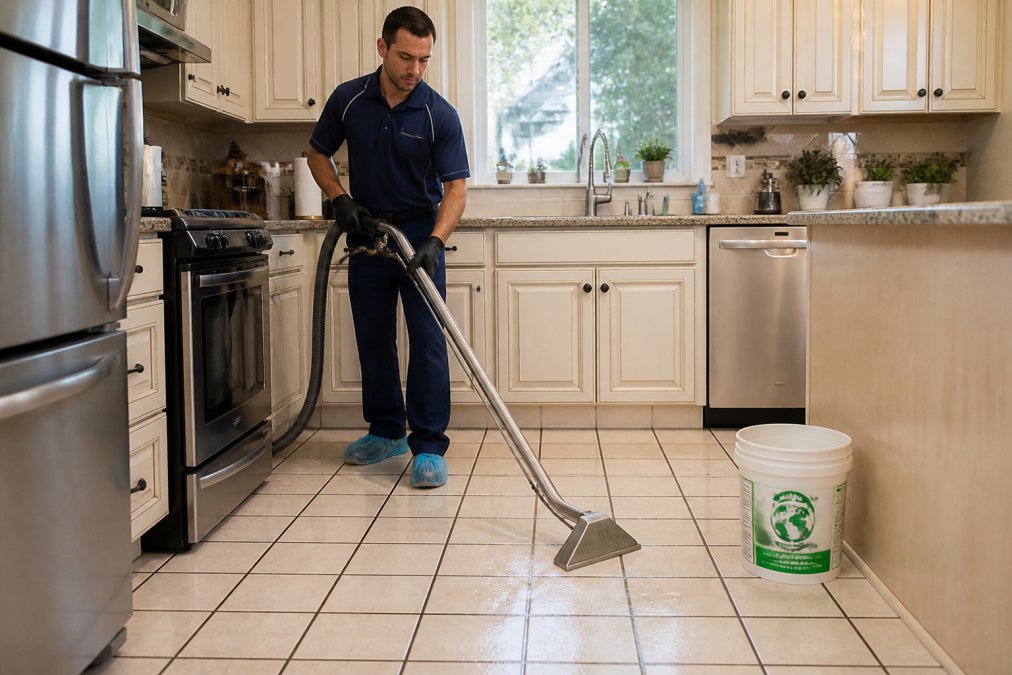
A professional tile and grout cleaning follows a defined sequence, and skipping steps is why DIY results fade. The process starts with inspection and pretreating, moves through agitation and high-pressure extraction, and finishes with sealing.
- Inspection and testing. The technician identifies grout type, sealant condition, and problem areas. A water-drop test shows whether the sealant is still repelling liquid or has worn through.
- Pretreatment. A cleaning solution is applied and given dwell time to break down grease and soil. Dwell time matters: solutions that are rinsed too quickly never reach the bond holding the stain.
- Agitation. A brush or pad loosens embedded grime from the grout lines without eroding the surface.
- High-pressure extraction. Heated water and vacuum extraction flush out suspended soil in a single pass, so nothing redeposits.
- Sanitization. Surfaces are treated to reduce bacteria, mold spores, and allergens that feed on organic film in damp grout.
- Sealing. A penetrating sealer soaks into the grout and repels liquids from inside the material, rather than sitting on top as a coating that peels.
- Final inspection. The technician reviews the results with you and notes any areas that may need a shorter maintenance cycle.
Why the Order Matters
Sealing over dirty grout traps the stain permanently. Cleaning without sealing leaves the pores open to the next spill. The two steps are not interchangeable, and the sequence is what makes the result last. Most professionally applied penetrating sealers hold up 12 to 24 months in kitchens and bathrooms, longer in low-traffic areas.
Environmental Impact of Cleaning Agents
Environmental impact has shifted how this work is done, and it is worth asking what a company puts on your floors before they start. Three categories matter:
- Green-certified solutions. Products that meet recognized safety criteria for human health and environmental impact are increasingly standard for residential work. The EPA’s Safer Choice program maintains a searchable list of cleaning products that meet its safety criteria, which is a useful reference when you are evaluating what a company uses.
- Pet-safe and low-VOC formulas. Households with pets, young children, or family members with asthma benefit from solutions that avoid harsh fumes and leave no toxic residue on a surface people walk on barefoot.
- Low-water methods. Modern extraction systems use far less water than older truck-mount setups while drying faster, which reduces both water use and the window for moisture to sit in grout and feed mildew.
What to Ask Before Booking
A short list of questions separates a thorough job from a surface wipe:
- What cleaning solution do you use, and is it safe for pets and children?
- Do you seal after cleaning, and what type of sealer?
- How much water does your process use, and how long until the floor is dry?
- Do you test the grout before starting to confirm the right approach?
The process is not just about a cleaner floor. Pretreatment, extraction, sanitization, and sealing work together to remove the soil, kill what feeds on it, and block the pores so the result holds. Skipping sealing is the most common reason a deep clean looks great for a month and then fades.
Tying the Process to Your Maintenance Schedule
The condition of your grout after a professional clean tells you how to plan the next one. If the technician finds worn sealant in a kitchen, that room likely needs resealing sooner than a low-traffic hallway. If mildew keeps returning in a bathroom, the moisture source, not the cleaning method, is the real issue. A good provider will flag those patterns during the final inspection so your maintenance calendar reflects how your home actually gets used, not a generic timeline.
Frequently Asked Questions
Is professional tile and grout cleaning worth it?
Yes, for most homes with tile floors. Professional tile and grout cleaning removes embedded soil, bacteria, and allergens that mopping and DIY scrubbing leave behind. It also restores grout color, extends floor longevity, and includes sealing to protect against future stains. For homeowners in Monmouth County and central New Jersey dealing with heavy foot traffic, pets, or older grout, the results typically justify the service.
How often should you schedule professional tile and grout cleaning?
Most homes benefit from professional cleaning every 12 to 18 months. High-traffic areas like kitchens, bathrooms, and entryways may need attention every 6 to 9 months, especially with pets or children. Low-traffic rooms can go 18 to 24 months between deep cleans. If you notice discoloration, lingering odors, or grout that stays dark after mopping, it is time to schedule a visit.
Does professional cleaning help prevent mold and mildew in grout?
Professional cleaning removes the organic matter, moisture, and biofilm that mold and mildew feed on. High-pressure extraction and sanitization kill mold spores and bacteria deep in porous grout, while sealing blocks the moisture that drives regrowth. In humid spaces like bathrooms and basements, this combination keeps grout cleaner longer than surface cleaning alone.
What is the difference between DIY cleaning and professional extraction?
DIY cleaning relies on mops, brushes, and consumer cleaners that reach only the surface. Professional extraction uses high-pressure hot water and vacuum recovery to pull soil from deep inside grout lines, then applies sealant to protect the surface. The result is a deeper clean, faster drying, and no dirt-attracting residue left behind, which is why professional results last far longer.