Table of Contents
- Does Steam Cleaning Remove Pet Urine Odors?
- Why Pet Urine Odors Persist After Steam Cleaning
- How to Remove Pet Urine Smell from Carpet: The Right Approach
- Best Enzyme Cleaners for Pet Urine
- Professional Pet Odor Removal Services: When DIY Isn’t Enough
- Testing for Colorfastness Before Treatment
- Drying Techniques to Prevent Mold and Mildew
- Preventing Future Pet Accidents
- Frequently Asked Questions
Last Updated: October 1, 2026
Does Steam Cleaning Remove Pet Urine Odors?
Steam cleaning alone won’t eliminate pet urine odors. This is the hard truth most pet owners learn too late.
Here’s why: steam heat may kill some bacteria, but it doesn’t break down uric acid crystals, the compounds that create stubborn, lingering smells. At PowerPro Carpet Cleaning, we’ve helped pet owners tackle this exact problem. The solution requires a multi-step approach that goes beyond just running a steam cleaner across your carpet.
In this guide, we’ll show you exactly what works and what doesn’t. We’ll cover the right techniques to actually remove pet urine smell from carpet, explain why certain methods fail, and help you understand when professional help becomes necessary.
Why Pet Urine Odors Persist After Steam Cleaning
Pet urine creates a chemical problem that heat alone cannot solve. When your dog or cat has an accident, urine soaks deep into carpet fibers, padding, and sometimes the subfloor beneath.
The issue is uric acid crystals. These crystals don’t dissolve in water or respond to heat. Steam may temporarily mask the smell by releasing moisture, but once the carpet dries, the odor returns, sometimes stronger than before.
Many pet owners make this mistake: they assume a powerful steam cleaning will fix everything. The carpet smells fresh for a few days. Then the smell comes back. This happens because the steam never neutralized the uric acid. It just pushed moisture around.
The real solution requires three things:
- Immediate blotting to remove as much urine as possible
- Chemical neutralization using enzymatic cleaners or vinegar solutions
- Proper drying to prevent mold and mildew growth Breaking down the complex proteins found in pet waste is most effectively achieved by using enzyme cleaners, a process that determines whether the scent is truly eliminated or merely masked.
Without all three, you’re fighting a losing battle. Steam cleaning alone skips the most important step: actually breaking down the compounds causing the smell.
How to Remove Pet Urine Smell from Carpet: The Right Approach
Removing pet urine smell requires speed, the right products, and patience. The sooner you act after an accident, the better your chances of complete odor elimination.
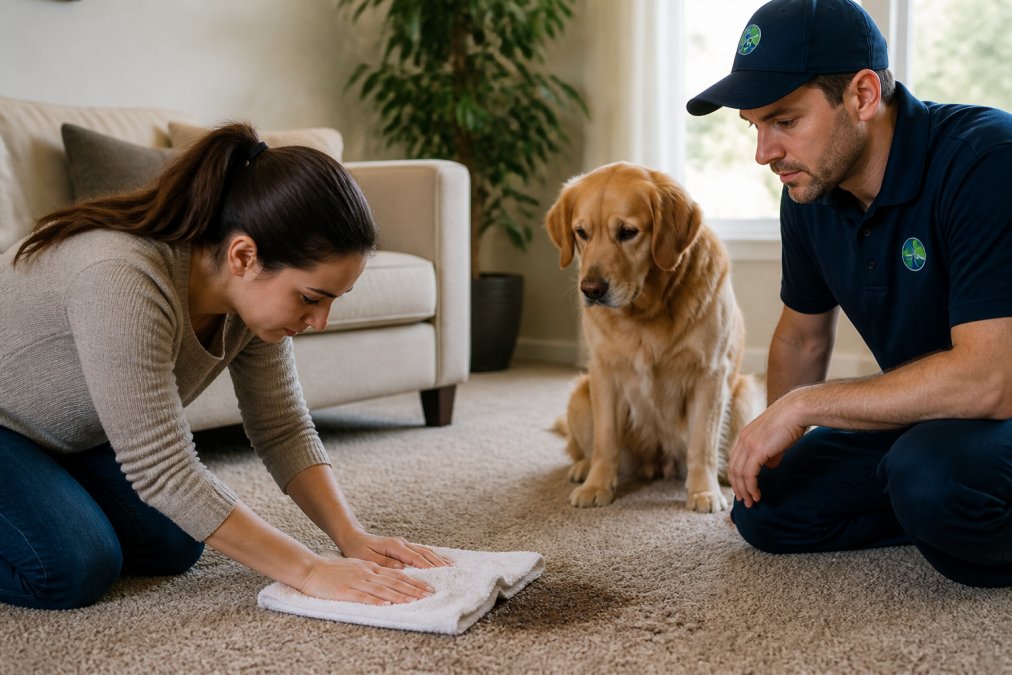
Immediate Blotting and Absorption
Act within the first few hours. The longer urine sits, the deeper it penetrates.
Grab absorbent towels, paper towels work, but cloth towels absorb more. Press firmly into the affected area. Don’t rub or scrub. Pressing straight down forces the towel to absorb urine before it spreads further into the padding.
Keep blotting until the towel comes away nearly dry. This step alone removes 40-60% of the problem. You’re preventing saturation of the carpet padding, which is where deep odors develop.
For fresh accidents, this immediate action prevents most of the damage. For older stains, blotting helps, but you’ll need the next steps.
Blot in a circular motion from the outside edges toward the center. This prevents the urine from spreading outward into clean carpet.
White Vinegar and Water Solutions
Vinegar is an acid that neutralizes the alkaline compounds in urine. Mix one part white vinegar with one part lukewarm water.
Spray the solution directly onto the stain. Let it sit for 5-10 minutes. The vinegar smell is strong, but it will fade as it dries. Don’t skip this step, the vinegar is doing the chemical work.
After the vinegar solution has sat, blot again with fresh towels. You’re removing both the urine and the vinegar residue.
This approach works best on fresh stains. For older, set-in odors, move to enzymatic cleaners.
Never mix vinegar with bleach or ammonia-based cleaners. The chemical reaction creates toxic fumes. Stick to vinegar and water only.
Baking Soda for Odor Neutralization
After blotting and vinegar treatment, sprinkle baking soda generously over the damp area. Baking soda absorbs remaining moisture and neutralizes lingering odors.
Let it sit for 12-24 hours. The longer it sits, the more odor it absorbs. Then vacuum thoroughly.
For extra odor elimination, mix baking soda with a few drops of essential oil before sprinkling. Lavender or lemon works well. This adds a fresh scent while the baking soda absorbs the pet odor.
Best Enzyme Cleaners for Pet Urine
Enzymatic cleaners are the most effective solution for deep-set pet urine odors. These products contain live enzymes that break down uric acid crystals at the molecular level.
Unlike vinegar or baking soda, enzymes actually digest the compounds causing the smell. This is why they’re the gold standard for pet odor removal.
How Enzymatic Cleaners Break Down Uric Acid Crystals
Uric acid crystals form when pet urine dries. These crystals are what create the persistent smell. Enzymes are biological catalysts that break these crystals into smaller compounds your carpet fibers can release.
The enzyme process takes time. Most enzymatic cleaners need 24-48 hours to work fully. You apply the product, let it sit, and the enzymes do the work while you wait.
This is why enzymatic cleaners outperform steam cleaning. Steam is temporary. Enzymes are permanent, they actually eliminate the source of the odor, not just mask it.
Common enzymes in these products include protease (breaks down proteins in urine) and amylase (breaks down organic compounds). Look for products labeled “enzymatic” or “enzyme-based” on the label. The most effective pet-specific formulas combine multiple enzyme types to target urine’s complex chemistry.
Choosing the Right Enzyme Cleaner for Your Carpet
Not all enzyme cleaners are equal. Some are too harsh for delicate fibers. Others don’t contain enough active enzymes to be effective.
Before applying any product, test for colorfastness. Apply a small amount to a hidden corner of your carpet. Wait 24 hours. If the color doesn’t fade or bleed, it’s safe to use.
Material-specific safety is critical:
Wool and wool blends: Wool is protein-based, the same compound enzymes target in urine. Use enzyme cleaners formulated for wool only, and dilute to half strength. Test extensively before full application. Never use ammonia-based or highly alkaline cleaners on wool, they cause permanent fiber damage and color loss.
Silk and delicate natural fibers: Avoid enzymatic cleaners entirely on silk, jute, or antique rugs. These fibers are too fragile for chemical treatment. Blot fresh accidents with plain water only, then consult a professional fiber conservator.
Synthetic fibers (polyester, nylon, olefin): These are most forgiving. Standard enzyme cleaners work well. Still test first, as some synthetic dyes can bleed under acidic conditions.
Blended carpets: If your carpet mixes fibers (wool-nylon blend, for example), treat it as the most delicate fiber present. When in doubt, dilute the enzyme cleaner and extend the drying time.
Look for enzyme cleaners specifically labeled for pet urine. General-purpose enzyme cleaners may not have the right enzyme blend. Pet-specific products are formulated for urine’s unique chemistry.
Apply the cleaner generously to the affected area. Saturate the carpet so the enzyme solution reaches the padding. Let it work for the full time recommended on the label, usually 24-48 hours. Do not rinse prematurely, the enzymes need full contact time to break down crystals.
Professional Pet Odor Removal Services: When DIY Isn’t Enough
For old stains, large affected areas, or multiple accidents, professional help becomes necessary. DIY methods work for fresh accidents and small spots. Deep-set odors often require professional equipment and expertise.
Carpet Extraction vs. Manual Scrubbing
Professional carpet extraction uses specialized equipment that injects cleaning solution deep into carpet fibers and padding. Then a powerful vacuum extracts the saturated liquid.
This process removes more urine and bacteria than manual scrubbing. Manual scrubbing can damage carpet fibers and doesn’t penetrate deeply enough for old stains.
Extraction also dries faster than manual methods. Professional equipment removes excess moisture, reducing drying time.
Carpet extraction removes moisture and contaminants that manual scrubbing cannot reach. This is why professional services are effective for deep-set odors.
Addressing Deep-Set Urine Odors in Padding and Subflooring
When urine soaks through carpet and padding, the smell becomes nearly impossible to remove without professional intervention. The padding absorbs and holds odor compounds.
Sometimes the padding must be replaced. If the subfloor underneath has been saturated, professional treatment with enzymatic solutions and specialized drying equipment becomes necessary.
At PowerPro Carpet Cleaning, our technicians assess whether padding can be salvaged or needs replacement. We use low-water extraction methods that dry quickly, preventing mold and mildew growth.
Testing for Colorfastness Before Treatment
Before applying any cleaning solution, always test your carpet for colorfastness. Some dyes bleed or fade when exposed to acidic solutions like vinegar or enzymatic cleaners.
Apply a small amount of your chosen cleaner to a hidden area, under furniture or in a closet. Wait 24 hours. Check for color fading, bleeding, or texture change.
If the carpet shows no damage, proceed with treatment. If it does, you’ve saved yourself from ruining visible carpet. This simple test takes minutes and prevents costly mistakes.
For delicate or antique rugs, consider professional testing. Some natural fibers require specialized care.
Using UV Light to Locate Hidden Urine
One of the most overlooked steps in pet urine removal is actually finding all the affected areas. Visible stains are obvious, but urine often soaks into carpet in spots you can’t see with the naked eye. This is why odors return after cleaning, you’ve only treated what’s visible.
UV blacklight detection reveals the full extent of contamination. Pet urine fluoresces under ultraviolet light, appearing as bright yellow or greenish spots. This lets you identify every accident site, including old, dried stains and spots hidden under furniture.
How to use a blacklight to locate urine:
Get a UV blacklight flashlight or handheld UV lamp. These are available at hardware stores or online retailers. Avoid cheap LED “blacklights”, true UV-A wavelength (365 nanometers) works best for urine detection.
Darken the room completely. Close curtains and turn off all lights. Urine fluorescence is faint in daylight and invisible under normal lighting.
Scan the entire carpet systematically. Move the blacklight slowly across the floor in rows, paying special attention to corners, under furniture, near walls, and doorways, common accident spots.
Mark affected areas. Use chalk, tape, or a pen to mark each spot the blacklight reveals. Don’t rely on memory; you’ll forget locations once the light is off.
Treat all marked areas. Now you know exactly where to apply vinegar, enzymatic cleaners, or baking soda. Treating only visible stains while missing hidden spots is why pet odors persist.
Why this step matters: Cats often urinate in multiple spots, and old urine can be nearly invisible on dark carpet. A single missed spot can perpetuate odor throughout the room. Professional cleaners use blacklights as standard practice; homeowners rarely do, which is why DIY attempts often fail.
After treating all blacklight-detected spots, scan again with the UV light 24-48 hours later. If spots still fluoresce, the enzymatic cleaner hasn’t fully broken down the uric acid. Retreat those areas and extend drying time.
Drying Techniques to Prevent Mold and Mildew
After cleaning, proper drying is critical. Damp carpet creates conditions for mold and mildew growth, sometimes worse than the original urine odor.
Open windows to increase air circulation. Use fans to move air across the treated area. A dehumidifier helps remove moisture from the air, speeding drying.
Avoid walking on wet carpet. The pressure from footsteps can push moisture deeper into padding. Keep pets and children away until the carpet is completely dry.
Professional drying equipment removes moisture faster than passive air drying. This prevents mold growth and returns your carpet to normal use.
Run ceiling fans continuously while the carpet dries. Air circulation is the fastest, most effective drying method.
Preventing Future Pet Accidents
Once you’ve eliminated the odor, prevent future accidents with these strategies:
- Enzymatic cleaners for immediate accidents: Keep an enzymatic cleaner on hand. Treat new accidents within hours.
- Restrict pet access to problem areas: Use baby gates or closed doors to limit where your pet can go while you’re training or addressing behavioral issues.
- Regular enzymatic maintenance: Even after thorough cleaning, occasional enzymatic treatment prevents odor buildup.
- Waterproof carpet protectant: Some products create a protective barrier on carpet fibers, making cleanup easier for future accidents.
- Address root causes: Consult your veterinarian if accidents are frequent. Medical issues or behavioral problems need professional attention.
Pet urine odors are stubborn, but they’re not permanent. The key is understanding that does steam cleaning remove pet urine odors requires more than heat, it requires chemical neutralization and proper drying.
For fresh accidents, DIY methods using vinegar, baking soda, and enzymatic cleaners work well. For older stains or widespread odors, professional carpet extraction becomes necessary. PowerPro Carpet Cleaning‘s low-water extraction methods and enzymatic treatments eliminate odors at the source while drying quickly to prevent mold growth. Our team uses organic, green-certified solutions that are safe for families and pets. Contact us at 848-347-3201 for professional pet odor removal that actually works.
Frequently Asked Questions
Does steam cleaning remove pet urine odors completely?
Steam cleaning alone often cannot eliminate pet urine odors because uric acid crystals penetrate deep into carpet fibers and padding. Heat may temporarily mask the smell, but without enzymatic treatment to break down the crystals, odors typically return. Professional steam cleaning combined with enzymatic cleaners and proper extraction is far more effective at neutralizing odors permanently.
What do professionals use to get urine smell out of carpet?
Professional pet odor removal services use a combination of enzymatic cleaners, which break down uric acid crystals, along with carpet extraction and specialized drying techniques. Many professionals also use non-bleach detergents and may apply deodorizing treatments to address residue in carpet padding and subflooring. The best results come from treating the source immediately and using multiple methods based on saturation depth.
Can I use vinegar to remove pet urine odors from carpet?
White vinegar and water solutions can help neutralize fresh urine and reduce immediate odors, but they work best as a first response rather than a complete solution. Vinegar addresses surface-level smell but doesn’t break down uric acid crystals embedded in fibers. For stubborn or old urine odors, enzyme cleaners are more effective because they chemically break down the compounds causing the smell.
Why does pet urine smell worse after steam cleaning?
Pet urine odors can seem worse after steam cleaning if the cleaning process spreads urine deeper into carpet padding without using enzymatic treatment. Heat and moisture can also reactivate dormant uric acid crystals, temporarily intensifying the smell. This is why proper extraction, enzyme application, and thorough drying are essential, steam alone can actually worsen odors if not combined with the right treatment methods.