Table of Contents
- What to Do in the First Hour of Emergency Water Damage
- The Water Damage Restoration Process, Step by Step
- Emergency Water Extraction Services: What to Expect
- Water Damage Cleanup Timeline: Hour by Hour
- How to File a Water Damage Insurance Claim
- Mold Remediation and Prevention After Water Damage
- Residential vs. Commercial Water Damage Cleanup
- Post-Restoration Maintenance and Prevention
- Frequently Asked Questions
Last Updated: September 10, 2026
What to Do in the First Hour of Emergency Water Damage
A burst supply line or failed water heater can dump dozens of gallons into a home before anyone notices. Emergency water damage cleanup for homes starts with one principle: stop the water, then start drying within the first hour. This guide from PowerPro Carpet Cleaning walks through the full process, from the first mop bucket to the final insurance check, for homeowners across Monmouth County and central New Jersey.
The first 60 minutes decide how much of your flooring, drywall, and belongings survive. Water wicks into subfloor seams and wall cavities fast, and mold can begin colonizing wet organic material within 24 to 48 hours, according to EPA guidance on mold and moisture. What you do before a crew arrives often matters as much as what the crew does after.
Immediate DIY Mitigation Steps
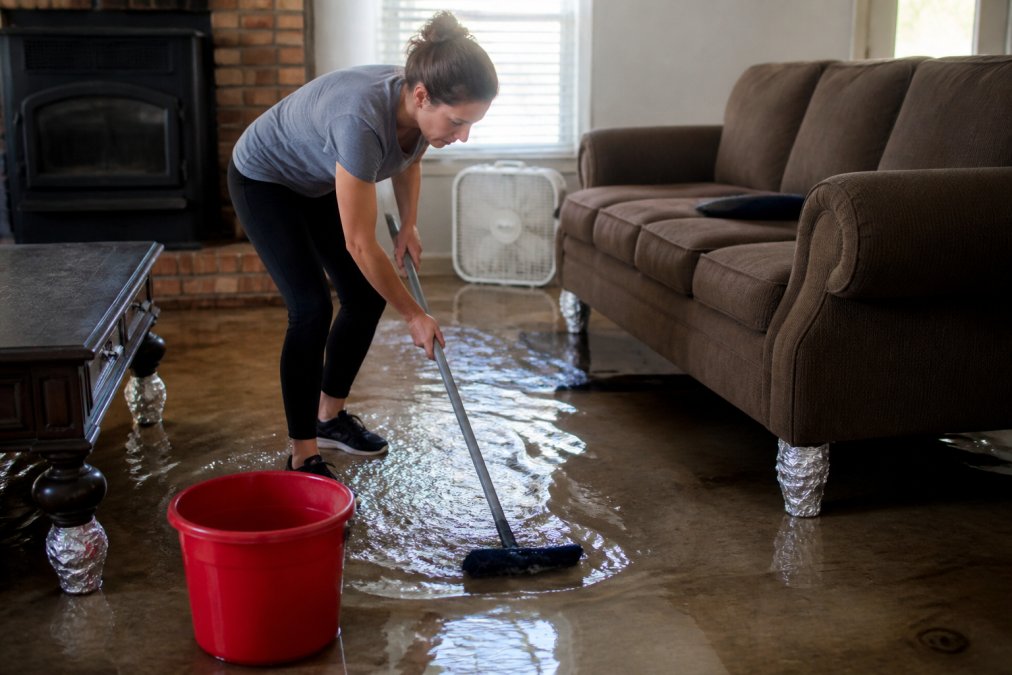
Shut off the water source first. For a burst pipe, close the main valve; for a water heater, kill the gas or power feed before anything else. Then cut power to affected rooms at the breaker box only if you can reach it while standing on dry ground.
Once the source is stopped, work through this sequence:
- Photograph everything before you move it, wide shots and close-ups
- Pull up wet rugs and move furniture onto foil or blocks
- Vacuum standing water with a wet/dry shop vac
- Run fans and open windows if outdoor humidity is low
- Lift wet carpet edges to expose the pad
- Call a restoration contractor for anything beyond a small, clean-water spill
Health Hazards of Standing Water
Standing water is not just inconvenient, it is a biological hazard. Water that has contacted sewage, ground runoff, or appliance discharge is classified as Category 3, meaning it carries bacteria, viruses, and parasites that can cause serious illness through skin contact or inhalation (the EPA). Even clean-water spills become Category 3 within about 48 hours as bacteria multiply.
Never wade barefoot through floodwater, and wear gloves and eye protection if you must handle soaked materials. Discard any food, medication, or cosmetic item that touched the water. If anyone in the home has asthma or allergies, keep them out of the affected area entirely until drying is complete.
The Water Damage Restoration Process, Step by Step
Professional restoration follows a defined sequence: assess, extract, dry, sanitize, and verify. Skipping or rushing any stage is why some homes smell musty weeks later while others come through clean.
A certified technician begins with a water damage assessment using moisture meters, a hygrometer, and thermal imaging to map exactly where water traveled behind walls and under floors. Moisture mapping matters because water rarely stays where you see it. It follows joists, pools under baseboards, and soaks into subfloor panels that look dry on the surface.
Water Extraction and Removal
Extraction is the fastest-moving phase. Truck-mounted or portable extractors pull standing water and deeply embedded moisture from carpet, pad, and hard flooring. For carpet restoration, technicians typically remove and dispose of the pad, then extract the carpet itself and dry it in place when the backing is salvageable.
Subfloor drying often requires specialty mats that pull moisture up through the flooring. This is the stage where speed pays off, since every hour of delay pushes more material toward replacement instead of restoration.
Dehumidification and Structural Drying
Drying is where the real work happens, and it is measured, not guessed. Technicians set commercial dehumidifiers and high-velocity air movers, then check readings daily with moisture meters and a hygrometer to confirm the structure is actually drying.
Air scrubbers run alongside to capture airborne mold spores and fine debris. HVAC cleaning may be needed if the system pulled humid air through the ductwork. Structural drying is complete only when readings match a dry standard for the home’s materials, not when the carpet merely feels dry to the touch.
Sanitization and Decontamination
Once the structure is dry, sanitization and decontamination address what moisture left behind. Category 3 water and any spill that sat long enough to grow mold requires antimicrobial treatment of affected surfaces, followed by deodorization to remove the organic compounds that cause persistent smells.
This step is not optional for sewage backup or floodwater intrusion. Skipping it leaves behind the conditions that let odors and microbial growth return the moment humidity rises again.
Emergency Water Extraction Services: What to Expect
Emergency water extraction services are the rapid-response arm of restoration: a crew arrives, stops the source if needed, extracts standing water, and sets drying equipment, typically within hours of your call. Response time is the single biggest variable in how much of your home is salvageable, because extraction removes the bulk of the water that would otherwise keep wicking into subfloor seams, wall cavities, and baseboards.
What the Crew Brings and Why It Matters
A professional extraction setup is not a shop vac with a bigger tank. The typical loadout includes:
- Truck-mounted or portable extractors that pull water and embedded moisture from carpet, pad, and hard flooring using heated water or high-lift vacuum
- Weighted extraction wands for carpet, which press down while pulling water up so the pad releases moisture instead of holding it
- Subfloor drying mats that use negative pressure to draw moisture up through hardwood and engineered flooring
- Moisture meters, a hygrometer, and thermal imaging to map where water traveled behind walls and under floors
- Commercial dehumidifiers and high-velocity air movers staged at the same visit so drying starts immediately after extraction
Triage Questions You Will Be Asked
When you call, expect to answer a few triage questions: what caused the water, when it started, whether it is clean or contaminated, and roughly how much area is affected. A good provider gives you an arrival window and tells you what to shut off in the meantime. Have the following ready before the call to speed dispatch:
- The water source (burst supply line, water heater, appliance, sump failure, or roof intrusion)
- The approximate time the water started
- Which rooms and how many square feet are affected
- Whether the water is clean, gray, or has contacted sewage or ground runoff
- Whether anyone in the home has asthma, allergies, or a compromised immune system
What Happens on Arrival
The crew confirms the source is stopped, then walks the loss with a moisture meter and thermal camera to map the full extent. Extraction begins in the wettest areas first. Carpet pad is typically removed and disposed of because it rarely dries fully in place, while the carpet itself is extracted and dried when the backing is salvageable. Hard flooring may need specialty mats, and baseboards are often detached so wall cavities can dry.
Drying equipment is set the same visit, and readings are logged daily until the structure matches a dry standard for its materials. That log matters later if you file a claim, because it shows the adjuster exactly how wet the structure was and how it dried. preventing roof water damage.
Local Response Coverage
PowerPro Carpet Cleaning has handled emergency calls since 1989, with technicians trained to Inspection Institution of Cleaning and Restoration standards and available around the clock. Crews serve homeowners across Monmouth County and central New Jersey, including Manalapan, Monroe, Eatontown, Howell, and the surrounding communities. A common mistake homeowners make is waiting until morning to call about a nighttime leak. Water does not pause overnight, and neither should your response.
Never run a household box fan over Category 3 water or sewage backup. It aerosolizes bacteria and spreads contamination through the room instead of drying it safely.
Water Damage Cleanup Timeline: Hour by Hour
The water damage cleanup timeline compresses into a predictable pattern: mitigation in hours, drying in days, and repairs in weeks. Knowing the shape of it helps you judge whether a contractor is moving at the right pace.
| Phase | Typical Timeframe | What Happens |
|---|---|---|
| Emergency response | 0-2 hours | Water shut off, assessment, extraction begins |
| Extraction and setup | 2-24 hours | Standing water removed, drying equipment placed |
| Structural drying | 3-5 days | Daily moisture readings until dry standard met |
| Sanitization | Day 4-6 | Antimicrobial treatment and deodorization |
| Repairs | Week 2 onward | Drywall repair, flooring replacement, painting |
Drying rarely finishes in a single day. Homes with thick carpet, hardwood, or water that reached the subfloor often need four to five days of equipment run time, and the equipment must stay running the whole time. Turning off dehumidifiers at night to sleep better resets your progress.
How to File a Water Damage Insurance Claim
Most homeowners policies cover sudden and accidental water damage, such as a burst pipe or appliance failure, but exclude gradual leaks and flooding from outside, which requires separate coverage through the National Flood Insurance Program. The claim itself lives or dies on documentation.
Insurance Claim Documentation Guide
Build your claim file before the adjuster arrives. A complete record speeds claims processing and reduces the chance of a disputed payout.
- Date and time you discovered the damage
- Photos of standing water before any cleanup
- Photos of damaged furniture, electronics, and flooring
- A written list of every damaged item with approximate age and value
- Receipts or photos for high-value items where available
- The plumber’s or contractor’s report on the cause
- All restoration invoices and equipment logs
Keep every receipt for emergency expenses, including hotel stays if the home is uninhabitable. When the insurance adjuster visits, walk the property with them and point out moisture mapping results and thermal imaging findings, since hidden damage is easy to miss on a quick walkthrough. If you hire a restoration contractor, ask whether they document the loss to insurer standards, because a clear moisture map often settles disputes before they start.
Photograph the water line on walls and furniture legs with a tape measure in frame. Adjusters use that line to confirm how high water actually reached, and it is nearly impossible to recreate after cleanup begins.
Mold Remediation and Prevention After Water Damage
Mold growth after water damage is a timing problem, not a luck problem. Spores are already present in most indoor air; they only need moisture and a food source to colonize. Dry the structure fully and mold rarely becomes an issue. Leave any material wet past 48 hours and it usually does.
Why Mold Follows Water Damage So Quickly
Mold needs three things: moisture, organic material, and time. Drywall paper, wood framing, carpet backing, and cellulose insulation all qualify as food sources. Once a surface stays damp past roughly 24 to 48 hours, colonization can begin, and visible growth often appears within a week. That is why the drying phase of restoration is measured with moisture meters rather than judged by touch. A wall that feels dry on the surface can still hold moisture inside the cavity, which is exactly where mold starts.
What Professional Remediation Involves
Remediation for an established problem is not a spray-and-wipe job. The standard sequence is:
- Containment, plastic sheeting and negative air pressure isolate the affected area so spores do not spread to clean rooms
- Removal, porous materials that cannot be cleaned, such as soaked drywall, insulation, and carpet pad, are bagged and disposed of
- Surface treatment, framing and hard surfaces are cleaned and treated with an antimicrobial
- Air scrubbing, HEPA air scrubbers run throughout to capture airborne spores and fine debris
- Verification, moisture readings confirm the structure is dry before containment comes down
If the affected area is larger than roughly 10 square feet, most practitioners recommend professional remediation rather than a DIY approach, because disturbing mold without containment spreads spores through the home (the EPA).
Health Considerations
Mold exposure can trigger allergic reactions, asthma flare-ups, and respiratory irritation, especially in children, older adults, and anyone with a compromised immune system. If anyone in the home falls into those groups, keep them out of the affected area until remediation and drying are complete. If you smell a musty odor but see no visible growth, that is still a signal to have the space checked, because odor usually means hidden moisture.
Prevention Habits That Actually Work
Prevention comes down to a short list of habits that keep moisture from ever reaching the colonization threshold:
- Fix leaks promptly, including slow drips under sinks and around the water heater
- Keep indoor humidity in check, especially in basements and crawl spaces during humid months
- Run a dehumidifier in below-grade spaces
- Inspect the spaces you never look at, like under sinks, behind the washing machine, and around the water heater
- Recheck previously wet areas after the first heavy rain to confirm no moisture returned
A common mistake is assuming a dried-out smell means the job is done. If any musty odor returns, call for a moisture check, because odor usually means hidden moisture, not leftover cleaning product.
Photograph the water line on walls and furniture legs with a tape measure in frame. Adjusters use that line to confirm how high water actually reached, and it is nearly impossible to recreate after cleanup begins.
Residential vs. Commercial Water Damage Cleanup
Commercial water damage cleanup scales up every variable: square footage, downtime cost, and the number of systems affected. A retail space or office with a commercial HVAC system needs ductwork checked for moisture, while a warehouse may need industrial drying capacity that far exceeds residential equipment.
Residential jobs usually center on a few rooms and finish in under a week. Commercial losses often require after-hours work so the business can reopen, plus documentation that satisfies both the insurer and any landlord or franchise requirements. If you run a business in Monmouth County or central New Jersey, ask a contractor upfront whether they handle commercial losses, because not every residential-focused provider does.
Post-Restoration Maintenance and Prevention
The work is not finished when the equipment leaves. Post-restoration maintenance protects the investment you just made in drying and repairs.
- Recheck previously wet areas after the first heavy rain
- Keep gutters clear and grade soil away from the foundation
- Replace washing machine hoses every five years
- Install a water leak sensor near the water heater and sump pump
- Run a dehumidifier in basements during humid months
A common mistake is assuming a dried-out smell means the job is done. If any musty odor returns, call for a moisture check, because odor usually means hidden moisture, not leftover cleaning product.
Water damage rarely waits for a convenient moment, and the difference between a quick recovery and a months-long rebuild usually comes down to who you call and how fast they arrive. PowerPro Carpet Cleaning has served homeowners since 1989 with 24/7 emergency availability, organic green-certified solutions, and a low-water method that lets carpets dry within hours instead of days. Our technicians are trained to Inspection Institution of Cleaning and Restoration standards and back every job with a 100% satisfaction guarantee. Get started with PowerPro Carpet Cleaning and protect your home before the next leak turns into a rebuild. Call us at 848 347 3201.
Frequently Asked Questions
What should I do if my house is water damaged?
First, shut off the water source if possible and cut power to affected areas at the breaker box. Then call emergency water extraction services. Remove valuables and begin documenting damage with photos. Avoid walking through standing water if it may be contaminated, and do not use a regular vacuum to remove water. Professional water damage cleanup should begin within 24 hours to prevent mold growth and structural damage.
How quickly does mold grow after water damage occurs?
Mold can begin growing within 24 to 48 hours of water intrusion. In humid conditions, it may start even sooner. That is why the water damage cleanup timeline matters: extraction and structural drying should start the same day. If materials stay wet longer than 48 hours, mold remediation becomes likely. Running dehumidifiers and air scrubbers helps, but professional moisture mapping and drying are more reliable for stopping mold before it spreads.
Does homeowners insurance cover water removal?
Most standard homeowners insurance policies cover sudden and accidental water damage, such as a burst pipe or appliance failure. They typically do not cover flooding from outside, which requires separate flood insurance. To file a water damage insurance claim, document everything before cleanup, keep receipts, and contact your insurance adjuster promptly. Coverage limits and deductibles vary, so review your policy or ask your adjuster what is included.
What is the difference between water extraction and water restoration?
Water extraction is the physical removal of standing water using pumps and wet vacuums. Water restoration is the broader process that follows: structural drying, dehumidification, sanitization, and repairs. Extraction is the first step of water damage cleanup. Restoration continues until moisture levels return to normal and the home is safe. Both are part of the water damage restoration process, but they address different stages of the work.