Table of Contents
- Why Choosing the Right Local Carpet Cleaning Company Matters
- Questions to Ask Carpet Cleaners Before You Book
- How to Verify Credentials and Insurance
- Comparing Service Estimates and Avoiding Hidden Fees
- Understanding Cleaning Methods: Steam vs. Dry Cleaning
- How Long Does Carpet Take to Dry After Cleaning?
- The Professional Carpet Cleaning Checklist for Your Home
- Red Flags to Avoid in Carpet Cleaning Advertisements
- Eco-Friendly and Non-Toxic Certification Verification
- Post-Cleaning Maintenance and Warranty Protection
- Equipment Quality Assessment: What to Look For
- Dispute Resolution and Service Guarantees
- What to Expect During a Professional Service Visit
- Making Your Final Decision: A Local Carpet Cleaning Company You Can Trust
- Frequently Asked Questions
Last Updated: October 4, 2026
Why Choosing the Right Local Carpet Cleaning Company Matters
Choosing the right local carpet cleaning company comes down to one question: who will actually protect your floors, your family’s air quality, and your wallet when something goes wrong? At PowerPro Carpet Cleaning, we’ve watched too many homeowners learn this the hard way after a cheap job left residue, mold, or a mystery charge on the invoice.
The stakes are higher than most people realize. Carpet fibers hold onto soil, pet dander, and moisture, and the wrong cleaning method can push contaminants deeper into the pad rather than lifting them out.
That’s why this guide walks through the exact vetting process we’d use ourselves: the questions to ask before booking, how to verify licensing and insurance, how to compare estimates without getting burned by hidden fees, and how to spot the red flags buried in a glossy advertisement.
Below, we’ll break down each step so you can walk into any estimate with a checklist instead of a gut feeling.
Questions to Ask Carpet Cleaners Before You Book
The first question to ask any carpet cleaner is simple: what method do you use, and why? A technician who can explain their process in plain terms is usually a technician who understands it. One who deflects or gives a vague answer is a warning sign before you’ve even scheduled a visit.
A few more questions worth asking on that first call:
- Are your technicians background checked and trained to a recognized standard?
- Do you carry liability insurance and workers’ compensation?
- Is the estimate based on square footage, number of rooms, or a flat rate?
- What’s included in the base price, and what costs extra?
- Do you offer a written satisfaction guarantee?
The answers tell you more than any advertisement will. A company that hesitates on insurance or guarantees is telling you something important. Ask these before you book, not after the van is in your driveway.
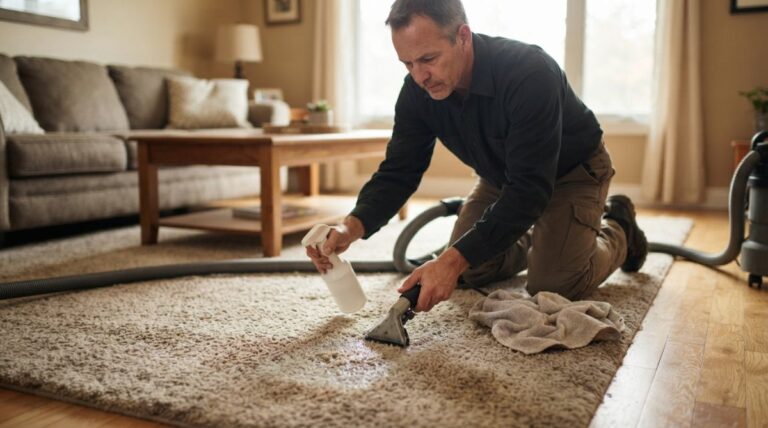
Ask whether the quote covers pre-treatment and spot cleaning or charges them separately. Many “low” estimates look cheap only because the real work, stain removal and traffic-lane pre-treatment, gets added on later.
How to Verify Credentials and Insurance
Verifying credentials takes about ten minutes and saves you from a much bigger headache. The trick is knowing which documents to ask for and how to confirm each one is real rather than a photocopy of a policy that lapsed last year.
Step 1: Ask for the license or registration number. Depending on how the business is set up, the company may hold a state contractor registration, a local business license, or both.
Step 2: Request a certificate of insurance (COI). A COI is the one-page document your insurer or the company’s insurer issues showing general liability coverage and, when applicable, workers’ compensation.
Step 3: Call the insurer to confirm the policy is active. The phone number is printed on the COI. This is the step most homeowners skip, and it’s the one that catches forged or expired certificates. It takes five minutes.
Step 4: Confirm technician certifications. The IICRC certification standards set the training benchmark for carpet cleaning technicians, covering fiber identification, cleaning chemistry, and equipment use.
Why each piece matters:
- General liability covers damage to your home, a broken vase, a stained wall, a scratched hardwood transition.
- Workers’ compensation covers a technician injured on your property. Without it, an injury can become your problem.
- IICRC certification signals the technician was trained on fiber-specific methods, not just handed a wand.
- Current policy dates matter because a COI from last year proves nothing about today.
Snap a photo of the technician’s ID and the company vehicle plate on arrival. If anything goes wrong later, you have a record tying the person in your home to the company on the invoice.
If a company hesitates on any of these four steps, treat it as your answer. Reputable firms keep their COI and certification numbers on hand and expect to be asked.
Comparing Service Estimates and Avoiding Hidden Fees
Comparing service estimates properly means comparing scope, not just the bottom-line number. Three quotes can look identical on price while covering completely different amounts of work.
Watch for these common hidden fees:
- Stairs and landings charged separately from room counts
- Pet odor treatment billed as an add-on rather than included
- Furniture moving fees that appear only after the technician arrives
- Travel or trip charges for addresses outside a core service zone
- Re-treatment fees if a stain returns within a stated window
Ask every company to put the quote in writing with a line-item breakdown. A written service agreement protects you if the final invoice doesn’t match what was promised on the phone. If a company won’t put numbers in writing, that’s your answer.
Pricing itself varies by carpet condition, square footage, and treatment type, so we don’t publish flat rates. The right move is to request a written quote based on your actual rooms and let the itemized breakdown do the comparing for you.
Understanding Cleaning Methods: Steam vs. Dry Cleaning
The two main methods you’ll encounter are hot water extraction, often called steam cleaning, and dry cleaning. Each suits different situations, and knowing the difference helps you ask better questions.
Hot water extraction injects heated water and cleaning solution into the carpet, then pulls it back out with powerful suction. It’s the deeper of the two methods and the one most manufacturers reference when they talk about warranty-safe cleaning.
Dry cleaning methods use minimal moisture, often a compound or low-moisture solution worked into the fibers and vacuumed away. These work well for light soil, quick turnaround situations, or carpets that can’t tolerate much water.
| Method | Moisture Level | Best For | Typical Drying Time |
|---|---|---|---|
| Hot water extraction | High | Deep soil, pet stains, allergen removal | 4-12 hours |
| Low-water cleaning | Low | Delicate fibers, quick turnaround | 1-4 hours |
| Dry cleaning compound | Minimal | Light maintenance cleaning | Under 1 hour |
Fiber type matters here. Wool, nylon, and polyester each respond differently to heat and moisture, and a technician who asks about your carpet fiber before recommending a method is doing it right. Our own approach combines organic, low-water cleaning with dry-steam extraction so carpets dry faster without leaving dirt-attracting residue behind.
How Long Does Carpet Take to Dry After Cleaning?
Carpet typically takes 4 to 12 hours to dry after professional cleaning, depending on the method, humidity, and airflow in your home. Low-water and dry-steam methods usually land on the faster end of that range, while traditional high-moisture extraction can stretch toward a full day.
Several factors push drying time longer:
- High indoor humidity or a rainy day outside
- Poor ventilation with windows closed and no fans running
- Thick, dense carpet padding that holds moisture
- Multiple passes of water without adequate extraction
You can speed things up by running ceiling fans, opening windows when weather allows, and keeping the HVAC system circulating air. Avoid walking on the carpet in street shoes until it’s fully dry, and don’t replace furniture until the pad underneath has dried completely.
This is where method choice pays off. A low-water clean that dries in a few hours means your kids and pets are back on the floor the same day, not the next morning.
Replacing furniture on damp carpet traps moisture against the pad and backing. That’s the setup for mold and mildew growth, which is far more expensive to fix than a slow-drying carpet.
The Professional Carpet Cleaning Checklist for Your Home
A professional carpet cleaning checklist keeps you organized before, during, and after the visit. Here’s what we’d hand a homeowner preparing for service.
Before the visit:
- Clear small items, toys, and floor clutter from carpeted areas
- Vacuum high-traffic zones to lift loose surface soil
- Note problem spots, pet accidents, and any stains you want prioritized
- Confirm the appointment window and ask about drying time
- Secure pets in a separate room during service
During the visit:
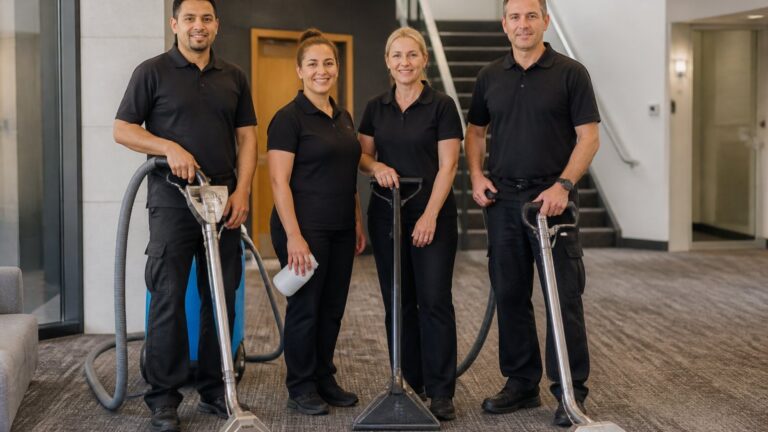
- Confirm the technician’s identification and company vehicle
- Walk through the scope of work before cleaning starts
- Point out stains and ask how each will be treated
- Ask about the products being used if anyone in the home has allergies
After the visit:
- Inspect the carpet while it’s still damp and note any missed spots
- Run fans and open windows to speed drying
- Wait the recommended time before replacing furniture
- Keep the receipt and any warranty paperwork
That checklist takes ten minutes to run through and prevents most of the disputes that come up after a cleaning.
Red Flags to Avoid in Carpet Cleaning Advertisements
Red flags in carpet cleaning ads usually show up as language designed to get a foot in the door rather than a price that reflects real work. The classic one is a teaser rate advertised per room that balloons once the technician assesses your carpet in person.
Other warning signs:
- No physical address or verifiable business history
- Prices that require a phone call to reveal, with heavy pressure to book on the spot
- No mention of insurance, licensing, or certifications anywhere
- Technicians who arrive without uniform, ID, or a company-branded vehicle
- Cash-only payment requests with no receipt offered
- No written estimate before work begins
The pattern behind most of these is the same: get inside the home, then upsell. A legitimate company will give you a written scope of work and a clear price before anyone touches your carpet. If the pitch relies on urgency or secrecy, walk away.
Eco-Friendly and Non-Toxic Certification Verification
Eco-friendly claims need verification, because “green” isn’t a regulated term on a cleaning van. Ask what certification backs the products being used, and ask to see it.
Legitimate green cleaning products often carry third-party certifications that verify low toxicity and environmental safety. The EPA Safer Choice program reviews cleaning product ingredients against human health and environmental criteria, so a product carrying that label has been independently assessed rather than self-declared.
This matters most for households with young children, pets, or family members with asthma and allergies. Residue left behind by harsh chemicals can linger in carpet fibers for days, and some people react to it. Organic, low-residue cleaning avoids that problem while still lifting soil and allergens out of the carpet.
Ask specifically: which products will be used, what certification do they carry, and is there a fragrance-free option? A company confident in its products will answer without hesitation.
Post-Cleaning Maintenance and Warranty Protection
Post-cleaning maintenance protects both your carpet and any warranty attached to it. Most carpet manufacturers require periodic professional cleaning to keep warranties valid, and skipping it can void coverage for defects later on.
Keep these habits going between professional visits:
- Vacuum high-traffic areas several times a week
- Blot spills immediately rather than rubbing them in
- Use doormats to cut down on tracked-in soil
- Schedule professional deep cleaning on the manufacturer’s recommended interval
- Keep receipts and service records in case a warranty claim comes up
That last point is the one people forget. If you ever need to file a claim for premature wear or a manufacturing defect, the manufacturer will ask for proof of professional maintenance. A folder of dated receipts is your evidence.
Ask your cleaning company whether their method is approved for your carpet’s specific warranty terms. Some manufacturers specify particular cleaning methods, and using the wrong one can technically void coverage.
Equipment Quality Assessment: What to Look For
Equipment quality separates a surface clean from a deep clean, and you can assess it without being a technician. Most guides skip this entirely, they tell you to ask about “professional equipment” and stop there. Here’s the checklist we’d use.
Truck-mounted vs. portable: the single biggest indicator.
Truck-mounted extraction units generate significantly more suction and heat than portable machines, which means they pull more soil and moisture out of the carpet in fewer passes. Portable units have their place, high-rise buildings, tight access, parking garages, but for a standard single-family home, truck-mounted equipment wins on results and drying time. Ask which the company plans to bring before you book.
On-site equipment checklist:
- Truck-mounted unit or a portable with a visible high-flow pump and heater
- A cleaning wand plus separate hand tools for upholstery, stairs, and edges, not just a floor machine
- Protective corner guards and hose ramps kept off walls, door frames, and furniture
- Clean filters and a well-maintained machine, no visible leaks, rust, or frayed hoses
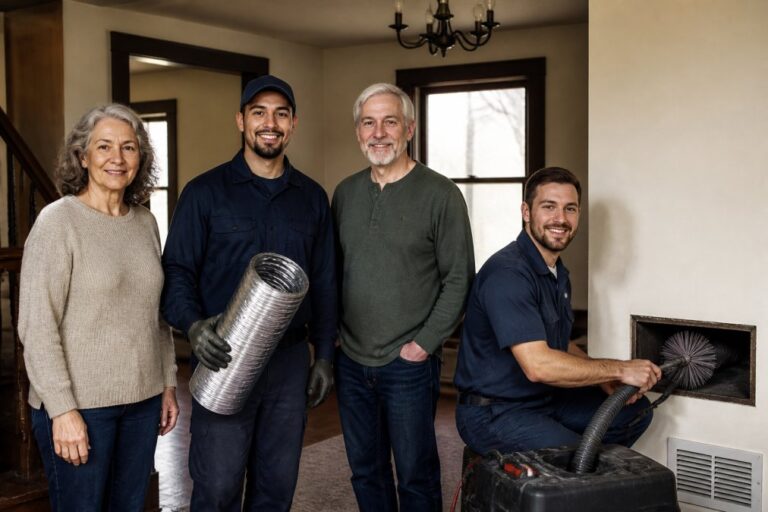
- Air movers or blowers brought in for drying, not just a verbal “open a window”
- Separate equipment for tile and grout work if you’re bundling services
- Fresh cleaning solution and a pre-spray pump for traffic-lane treatment
Why maintenance matters as much as type.
A well-serviced truck mount with clean filters performs better than a neglected one, and it shows in how evenly the carpet dries. Ask how often the equipment is serviced and whether the technician can describe the last maintenance. A vague answer is a clue.
What to watch during the visit:
- Does the technician pre-vacuum high-traffic areas before applying solution?
- Are overlapping wand strokes used, or is the wand rushed in single passes?
- Is dwell time given to pre-treatment, or is extraction started immediately?
- Are air movers set up before the technician leaves?
A portable unit that isn’t paired with adequate drying equipment can leave carpet damp for a full day, which is the setup for mold and mildew. If the company only brings a portable, ask how they plan to dry the carpet afterward.
Equipment is the one part of the job you can actually see. Use it as a tiebreaker when two companies quote similar scopes.
Dispute Resolution and Service Guarantees
Dispute resolution starts with the service agreement, not with a phone call after something goes wrong. Before booking, ask what happens if you’re not satisfied and get the answer in writing.
A solid satisfaction guarantee should state three things: what triggers a re-clean, how long you have to report a problem, and whether refunds are offered if a re-clean doesn’t resolve it. Vague promises like “we stand behind our work” mean nothing without those specifics.
If a dispute does come up, follow this order:
- Document the issue with photos and a written description
- Contact the company within the stated guarantee window
- Request a re-clean or remedy in writing
- Escalate to a formal complaint if the response is inadequate
Most reputable companies resolve issues with a single call. The ones that don’t are usually the ones that never put a guarantee in writing to begin with.
The guarantee is only as good as its terms. A written satisfaction policy with a clear window and remedy is worth more than a friendly verbal promise.
What to Expect During a Professional Service Visit
A professional service visit follows a predictable sequence: walkthrough, pre-treatment, extraction, and drying setup. Knowing the steps helps you spot a rushed job.
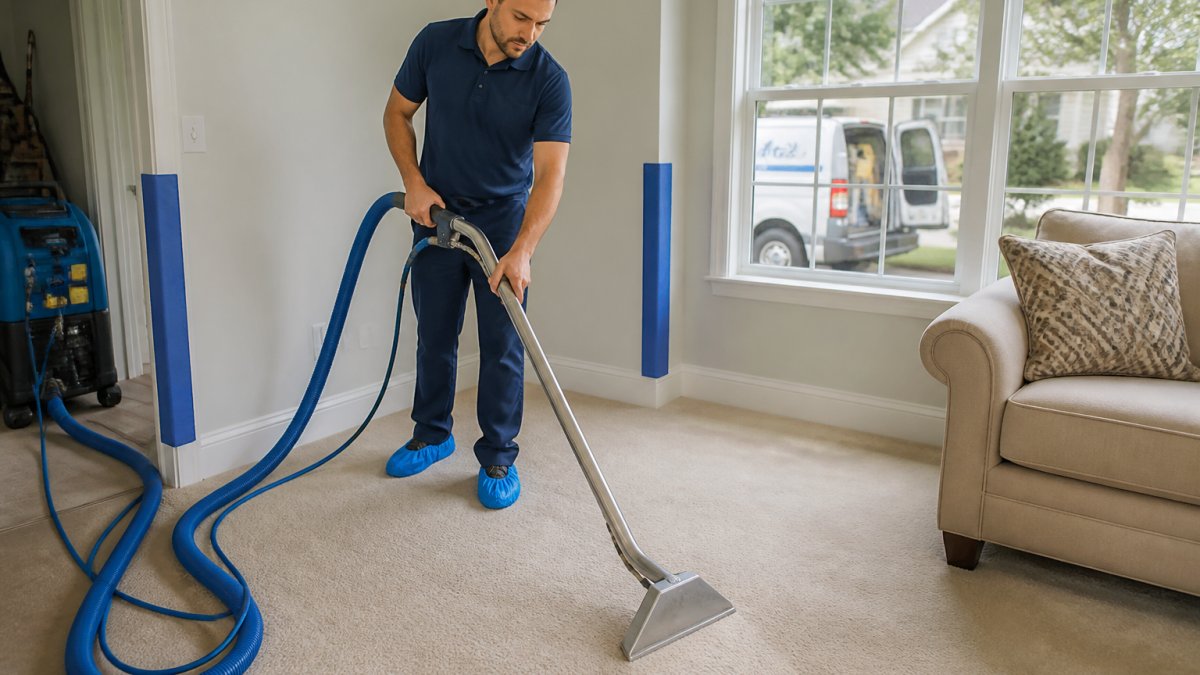
The technician should start with a walkthrough to confirm the scope and note any pre-existing damage. Pre-treatment comes next, with solution applied to traffic lanes and stains and given time to work before extraction begins.
Extraction follows, with the wand passed in overlapping strokes to pull soil and moisture out. After that, the technician sets up air movers or advises on ventilation and walks you through the finished work before leaving.
For urgent situations, like a burst pipe soaking a carpet, response time matters more than anything else. Our team at PowerPro Carpet Cleaning stays available around the clock for emergency calls.
Making Your Final Decision: A Local Carpet Cleaning Company You Can Trust
The right local carpet cleaning company is the one that answers your questions straight, puts the estimate in writing, and backs the work with a real guarantee. Everything else, the ads, the teaser pricing, the glossy mailers, is noise.
Run every candidate through the same filter: verified credentials, itemized quote, clear method explanation, and a written satisfaction policy. Most companies will pass two of those four. The one that passes all four is your answer.
That’s the standard we hold ourselves to at PowerPro Carpet Cleaning. We’ve been family-owned since 1989, our technicians train to Inspection Institution of Cleaning and Restoration standards, and we use organic, green-certified solutions with a low-water method that lets carpets dry within hours. Every job is backed by our 100% satisfaction guarantee.
Frequently Asked Questions
What questions should I ask before hiring a carpet cleaner?
Ask about their cleaning method, whether they are licensed and insured, if they perform background checks on technicians, and what their satisfaction guarantee covers. Request a written service estimate that itemizes pre-treatment, soil extraction, and any add-ons like upholstery cleaning or odor removal. Confirm whether they use truck-mounted extraction or portable units, and ask for customer references from the past six months. These questions reveal whether the company operates transparently and has the equipment to deliver professional carpet cleaning results.
How can I tell if a carpet cleaning company is reputable?
Check for IICRC certification, a physical local address, and a verifiable business license. Read online reviews across multiple platforms, not just their website. Ask for customer references and actually call them. A reputable company will provide a written service agreement, carry liability insurance, and never demand full payment before the work begins. They will also be transparent about their cleaning technicians being background checked and trained to industry standards.
What is the difference between steam cleaning and dry cleaning for carpets?
Steam cleaning, also called hot water extraction, uses heated water and cleaning solution injected into the carpet fibers, then immediately extracted with strong suction. It removes deep soil and allergens but requires drying time. Dry cleaning methods use minimal moisture or specialized compounds and allow faster use of the room. Low-water and dry-steam methods fall between these two, offering deep cleaning with faster drying. The right choice depends on your carpet fiber types, humidity levels, and how quickly you need the room back in use.
Should I choose a franchise or a local family-owned carpet cleaner?
Both can deliver good results, but local family-owned companies often provide more consistent technicians, direct accountability, and flexible scheduling. A family-owned business operating in your area for decades has built its reputation on repeat customers and referrals, so they tend to prioritize satisfaction guarantees and post-cleaning support. Franchises may have standardized processes but can vary by location. Ask about ownership, training standards, and whether the same crew will handle your home each visit.
What red flags should I look for in carpet cleaning advertisements?
Watch for unusually low price per room offers that exclude pre-treatment, stain removal, or furniture moving. Bait-and-switch pricing, no physical address, no license number, and high-pressure upsells on arrival are common warning signs. Also be cautious of companies that cannot explain their cleaning method, refuse to provide a written service quote, or have no verifiable customer references. Legitimate companies will gladly answer questions about insurance, equipment, and their satisfaction guarantee before you book.
How often should carpets be professionally cleaned for health benefits?
Most households benefit from professional deep cleaning every 12 to 18 months. Homes with pets, children, allergy sufferers, or high foot traffic may need cleaning every 6 to 12 months. Regular professional cleaning removes soil, dander, and allergens that vacuuming cannot reach. If you notice persistent odors, visible staining, or increased allergy symptoms, schedule a cleaning sooner. A local carpet cleaning company can assess your carpet fiber types and recommend a maintenance schedule based on your specific conditions.
Carpet cleaning is one of those purchases where the cheapest quote often costs the most in the long run. If you want a company that shows up in uniform, explains the method before starting, and stands behind the result, PowerPro Carpet Cleaning is built for exactly that. Call us at 848 347 3201 to schedule a visit, and get a deeper clean that dries faster and leaves nothing behind but fresh carpet.