Table of Contents
- How Pet Urine Reaches the Subfloor
- Visual Signs of Urine Saturation in Carpet and Padding
- How to Find Pet Urine with a Black Light
- Checking for Moisture and Odor Reactivation
- Inspecting the Subfloor Directly: What to Look For
- How Long Does Urine Smell Last on a Floor
- How to Get Animal Urine Out of Subfloor
- Can You Use KILZ on a Subfloor for Pet Urine
- When to Call a Professional
- Frequently Asked Questions
Last Updated: October 6, 2026
How Pet Urine Reaches the Subfloor
Pet urine doesn’t stay on the surface of your carpet. When your dog or cat has an accident, the liquid soaks through the carpet fibers and into the padding underneath. From there, it continues down into the subfloor itself. This is how to tell if pet urine soaked into subfloor, and whether the damage goes deeper than just a surface stain.
The process happens quickly. Urine is mostly water, so it moves downward through gravity and capillary action. Carpet padding acts like a sponge, absorbing moisture rapidly. Once the padding is saturated, the liquid reaches the subfloor. If your carpet has been wet multiple times from repeated accidents, the subfloor can become deeply contaminated.
Understanding how urine travels through your flooring is the first step to fixing the problem correctly.
The subfloor is the structural layer beneath your carpet and padding. It’s typically made of plywood, oriented strand board (OSB), or concrete. Once urine saturates this layer, it creates two problems: persistent odor and potential structural damage.
Fresh urine is easier to treat than old urine. The longer urine sits, the more it bonds with the subfloor material and the harder it is to remove completely.
Visual Signs of Urine Saturation in Carpet and Padding
Look for dark stains on your carpet that don’t match spills or dirt. Urine stains often appear yellow or brown, especially under natural light. If you see the same spot repeatedly, that’s a sign of either repeated accidents in that location or urine that has soaked through and is wicking back up from below.
Wet carpet padding is another clear sign. If you lift the edge of your carpet and the padding feels damp or smells strongly of urine, saturation has occurred. Padding that’s been wet for hours or days may also show discoloration or mold growth.
Check for these visual indicators:
- Yellow or brown discoloration on carpet fibers
- Darkened areas that spread beyond a single accident spot
- Wet or damp padding underneath the carpet
- Visible mold or mildew on the underside of padding
- Carpet that feels spongy or soft in certain areas
The smell is often the strongest indicator. If you can smell urine even after cleaning the carpet surface, the odor is coming from deeper layers. This tells you that urine has definitely soaked into the subfloor.
Mold can grow on wet padding within 24-48 hours (the CDC). If you suspect saturation, address it quickly to prevent mold contamination and health risks.
How to Find Pet Urine with a Black Light
A UV black light is the fastest way to map where accidents have happened, but it is not a depth test. It shows you where urine residue sits on the surface of carpet fibers and padding, it does not tell you whether the liquid reached the subfloor. Treat it as step one of a sequence, not the answer.
What you need:
- A 365-395 nm UV flashlight (the wavelength most commonly sold for pet stain detection)
- A dark room, no daylight, no overhead lights, no phone screen glare
- Painter’s tape or chalk to mark spots
- Nitrile gloves and a respirator if you’ll be pulling up carpet afterward
How to scan:
- Close blinds and curtains, and turn off every light in the room. Wait two to three minutes for your eyes to adjust.
- Hold the UV light 6-12 inches from the carpet and sweep slowly, about one foot per second. Fast sweeps miss faint spots.
- Urine typically fluoresces as a yellow, amber, or blue-white glow. Fresh spots look brighter; old, dried spots look duller and more diffuse.
- Mark each spot with tape. Photograph the pattern, clusters tell you where the pet repeatedly went.
- Check along baseboards, in corners, under furniture legs, and on the tack strip where carpet meets the wall. These are the spots owners miss.
What a black light cannot tell you:
- Depth. A bright glow on the carpet surface may be a single recent accident, or the top of a column of urine that has soaked through the pad and into the subfloor. The light only sees the top layer.
- False positives. Detergent residue, some carpet dyes, dried vomit, certain laundry products, and even some pet foods fluoresce under UV. A glowing spot is a candidate, not a confirmation.
- False negatives. Urine that has been cleaned with an enzyme product may not glow at all, even though odor compounds remain in the pad or subfloor.
- Concrete subfloors. UV light is far less useful on bare concrete, because urine wicks and spreads rather than pooling in a defined spot.
How to use the results:
Use the UV map to decide where to pull back carpet and inspect. If you find one or two small, isolated spots, you may be able to spot-treat. If you find a large cluster, especially near a wall, a crate, or a favorite sleeping spot, assume the pad is saturated and plan to lift the carpet for a direct subfloor inspection.
Scan on a dry day with the HVAC off. Humidity and airflow can spread odor and make it harder to isolate which spot is the source.
UV flashlight wavelength guidance for pet stain detection
Checking for Moisture and Odor Reactivation
Humidity and heat can reactivate urine odor even after the carpet appears dry. This happens because moisture dissolves the urine compounds again, releasing the smell. If your home gets humid or you’ve had moisture from water damage, cleaning, or spills, old urine odors may return.
Test for moisture reactivation:
- Feel the carpet in suspected areas, does it feel damp or cool?
- Smell the carpet after the home has been closed up for several hours
- Check if odor is stronger in humid weather or after rain
- Notice if smell returns after carpet cleaning (a sign that moisture reactivated deep contamination)
If odor returns after cleaning, the urine has soaked into the subfloor. Surface cleaning won’t solve the problem because the source is underneath. This is a key sign that deeper intervention is needed.
Humidity levels above 50% can trigger odor reactivation. In basements or homes with poor ventilation, this happens more often. If you live in an area with high humidity, moisture control becomes part of your solution.
Inspecting the Subfloor Directly: What to Look For
The only way to confirm urine has soaked into the subfloor is to look at the subfloor. Odor, UV glow, and damp padding are all clues, none of them are proof. This section gives you a repeatable inspection sequence and tells you what each subfloor material actually looks like when it’s contaminated.
Step-by-step inspection sequence
Work through these steps in order. Stop as soon as you have a clear answer.
- Pull back the carpet at the nearest seam or wall edge. Use a pry bar or your hands, most carpet is held by tack strip along the perimeter. Lift a 2-3 foot section.
- Smell the padding first. Hold the padding close to your nose, then smell the back side (the side that faced the subfloor). If the back of the pad smells stronger than the front, urine has passed through it.
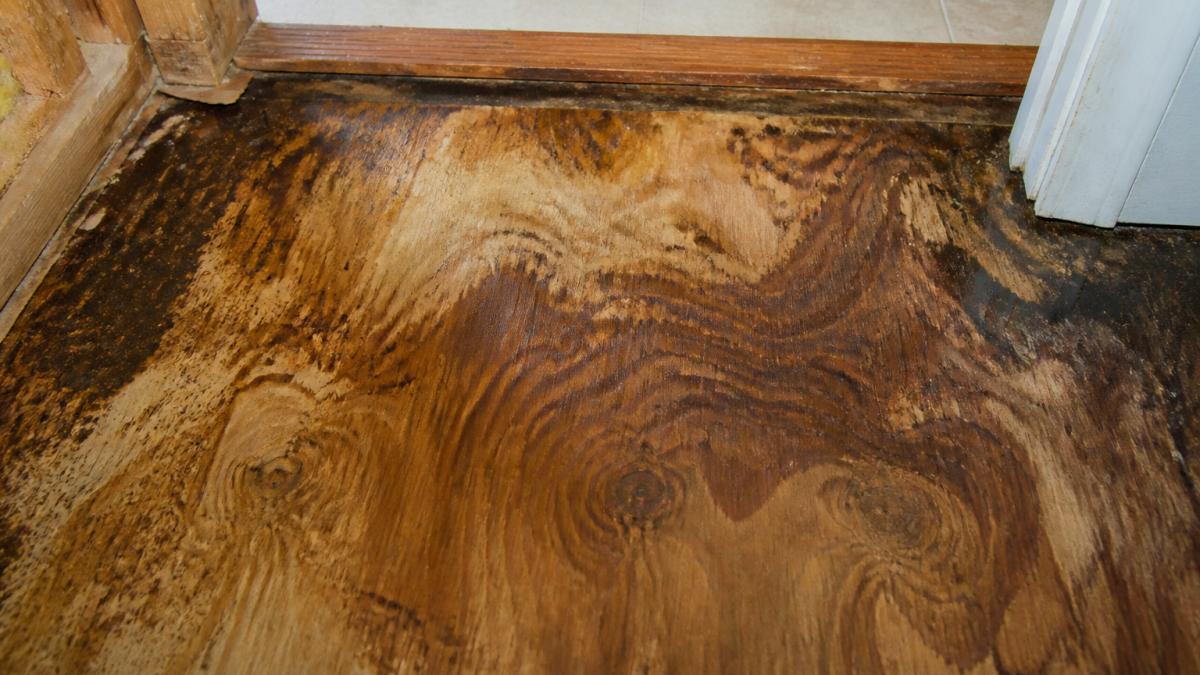
- Look at the subfloor surface directly under the pad. You are looking for a stain footprint. Urine stains on wood are usually darker at the center and fade outward, a “halo” pattern.
- Press the subfloor with your thumb or a screwdriver handle. Soft, spongy, or crumbly areas mean the material has broken down. Firm resistance means the surface is intact even if stained.
- Check the subfloor seams and edges. Urine follows gravity and gaps. Look where two sheets of plywood or OSB meet, and along the wall plate. Staining there usually means deeper penetration.
- Confirm with a moisture meter. A pin-type moisture meter ($30-$80 at most hardware stores) reads the percentage of moisture in wood. Compare a suspect area to a known-dry area of the same subfloor. A reading more than 2-3 percentage points higher than the dry reference is a red flag.
- Cross-check with odor after a humidity test. Close the room for several hours, then walk in and smell. If odor is stronger than when you left, contamination is still active in the subfloor.
What each subfloor material looks like when contaminated
Plywood: Urine wicks along the grain and between plies. Look for dark brown or black staining that follows the wood grain, delamination at the edges (plies lifting apart), and a soft, spongy feel when pressed. Plywood can hold odor for years because urine penetrates the glue lines between plies.
OSB (oriented strand board): OSB swells dramatically when wet. Contaminated OSB often shows raised, puffy patches, visible strand separation, and crumbling at the edges. Because OSB is made of compressed strands and resin, once urine soaks in, the board typically cannot be cleaned, it has to be cut out and replaced.
Concrete: Concrete is porous and wicks urine laterally, so the stain footprint is usually much wider than the original accident. Look for a white, chalky efflorescence ring around the stain, a dark damp-looking patch that never fully dries, and odor that seems to come from a broad area rather than one spot. Concrete cannot be “replaced” the way wood can, it has to be sealed or treated with a penetrating product.
Finished wood (hardwood over a subfloor): If the finished floor is wood, urine often travels through the seams between boards and stains the subfloor below. Look for cupping (edges higher than the center of each board), dark seams, and finish failure around the stain. The finished floor may need to come up to access the subfloor.
What confirms contamination vs. what doesn’t
| Sign | Confirms subfloor contamination? |
|---|---|
| UV glow on carpet | No, surface only |
| Odor returns after cleaning | Strongly suggests yes |
| Damp or discolored padding | Suggests yes, inspect subfloor |
| Dark stain on subfloor surface | Yes |
| Soft or spongy subfloor | Yes, and damage is structural |
| Moisture meter reading elevated vs. dry reference | Yes, when combined with odor or staining |
| Odor only, no visible stain | Possible, check seams and wall plate |
If you find soft, crumbling, or moldy subfloor material, stop and address it before reinstalling flooring. Reinstalling over active contamination traps moisture and odor and can void flooring manufacturer warranties.
When to stop inspecting and call a pro
Stop and call a professional if the affected area is larger than roughly 2 square feet, if you find mold, if the subfloor is soft enough to compress with light thumb pressure, or if the contamination spans multiple rooms. At that point, the question is no longer “did urine soak in”, it’s “how much material needs to come out,” and that’s a job for someone with moisture meters, a scope camera, and the right protective equipment.
How Long Does Urine Smell Last on a Floor
Urine odor can persist for months or years if the source isn’t removed. Once urine soaks into the subfloor, the smell becomes a long-term problem. The timeline depends on several factors:
- How deep the urine penetrated
- How much urine saturated the area
- The material of the subfloor
- Humidity and temperature in your home
- Whether you’ve cleaned or sealed the area
Fresh urine on carpet can smell for weeks if not treated. Urine that has soaked into padding might smell for months. Urine in the subfloor can smell indefinitely until the contaminated material is removed or properly sealed.
Many pet owners report that odor returns seasonally. Summer heat and humidity trigger the smell again. This is a sign that urine is still present in the subfloor, just dormant in dry conditions.
How to Get Animal Urine Out of Subfloor
Once urine has soaked into the subfloor, you have three options: clean and seal, replace the affected section, or both.
Cleaning the subfloor:
If saturation is light to moderate, enzymatic cleaners can break down urine compounds. These cleaners use enzymes to digest the organic material in urine. You’ll need to:
- Remove the carpet and padding from the affected area
- Apply enzymatic cleaner generously to the subfloor
- Let it sit for 24-48 hours to work
- Wipe or rinse away the cleaner
- Allow the subfloor to dry completely
This method works best for recent contamination. Old, deeply embedded urine is harder to remove completely.
Sealing the subfloor:
After cleaning, a sealant can lock in any remaining odor and prevent moisture from reactivating it. Sealants create a barrier between the subfloor and new flooring.
Replacing the subfloor:
If damage is extensive or urine has soaked deep into the material, replacement is often the best option. This removes the contamination entirely rather than trying to seal it in. It’s more expensive upfront but provides a permanent solution.
Can You Use KILZ on a Subfloor for Pet Urine
KILZ is a primer-sealer that can help contain urine odor. It’s not a cure, but it can reduce odor reactivation after you’ve cleaned the subfloor. KILZ works by creating a moisture barrier that prevents humidity from reactivating urine compounds.
How to apply KILZ:
- Clean the subfloor thoroughly with an enzymatic cleaner first
- Allow the subfloor to dry completely (24-48 hours minimum)
- Apply KILZ according to manufacturer instructions
- Use a roller or brush to ensure full coverage
- Apply a second coat for best results
KILZ is most effective on wood subfloors. It’s less effective on concrete. The product works best when the subfloor is already clean. If you apply KILZ over contaminated material, odor will eventually break through.
Important: KILZ is a temporary solution. It buys you time and reduces odor, but it doesn’t remove urine from the subfloor. If urine is deeply embedded, you’ll eventually need to replace the material.
KILZ can extend the life of a contaminated subfloor, but it’s not a permanent fix. Use it as part of a complete strategy that includes cleaning and possibly replacement.
When to Call a Professional
You should call a professional if:
- Urine has soaked into the subfloor (confirmed by inspection)
- Odor returns after you’ve cleaned the carpet
- You see signs of mold or structural damage
- The affected area is large or in multiple locations
- You’re not comfortable removing carpet or padding yourself
- You’re selling your home and need the damage assessed
Professional cleaners have specialized equipment and enzymatic solutions. They can also identify whether the subfloor needs cleaning, sealing, or replacement.
PowerPro Carpet Cleaning can inspect your floors and recommend the best solution for your situation. Our team is trained to identify pet urine saturation and determine whether the damage is surface-level or deep. We use professional-grade enzyme cleaners.
Frequently Asked Questions
How can you tell if pet urine soaked into the subfloor?
The clearest signs include persistent urine odor that returns after cleaning, visible discoloration or staining on the subfloor when carpet is removed, soft or warped wood subfloor material, and moisture detected when you press a moisture meter into the subfloor. A black light will reveal urine fluorescence in affected areas. If the odor returns within days or weeks of cleaning, urine saturation is likely present in the subfloor padding or flooring material itself.
How long does urine smell last on a floor?
Without proper treatment, pet urine odor can persist for months or years, especially if it has saturated the subfloor. The smell often fades temporarily but returns when humidity increases or the area gets wet. Even if the carpet is cleaned, urine trapped in the padding and subfloor continues to emit odor. Professional enzyme cleaning or subfloor sealing and replacement are the most effective ways to permanently eliminate the smell rather than mask it.
Can you use KILZ on a subfloor for pet urine?
KILZ primer can seal urine odor on a subfloor, but only after the urine has been thoroughly cleaned out. Applying sealant over contaminated material traps odor underneath and does not eliminate it. The subfloor must first be cleaned with an enzyme solution or enzymatic cleaner, allowed to dry completely, and inspected for remaining saturation. Once confirmed clean and dry, KILZ or similar odor-blocking primer can prevent residual odor from returning and protect the subfloor before new flooring is installed.
How do you get animal urine out of a subfloor?
Start by removing the carpet and padding to access the subfloor directly. Clean the affected area with an enzyme-based cleaner designed for pet urine, which breaks down the uric acid crystals responsible for odor. Allow the solution to soak for the time recommended by the product, then extract or mop thoroughly. For deep saturation, the subfloor may need to be sanded or replaced entirely. Ensure the subfloor dries completely before sealing with an odor-blocking primer or applying new flooring.
Persistent pet urine odor is a sign that contamination has reached deeper than your carpet. If you’ve cleaned the surface and the smell returns, the subfloor is likely involved. The sooner you address it, the better your options. Contact PowerPro Carpet Cleaning at 848-347-3201 to schedule an inspection and get a clear plan for restoring your floors. Our team will assess the damage and recommend whether cleaning, sealing, or replacement is the right choice for your home.